Deep Sea Mining
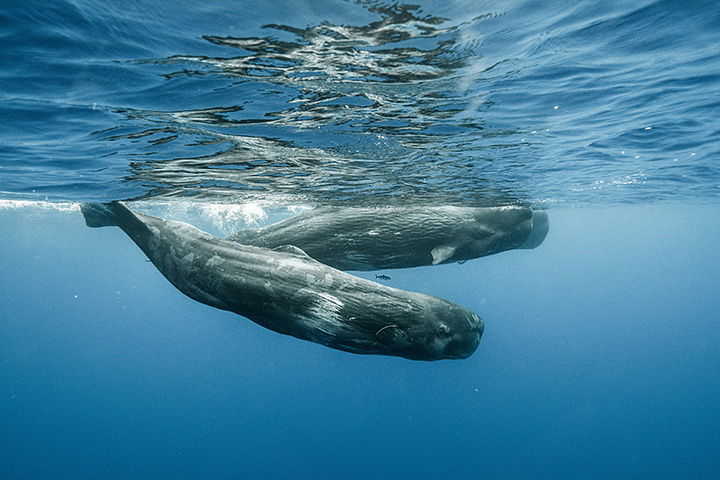
Photo by Stanislav
Overview
While commercial deep-sea mining has not yet begun, exploration of numerous potential mining sites is occurring, in both national and international waters. There is concern amongst many experts and entities involved that commercial deep-sea mining is poised to move ahead without appropriate, science-based regulation.
Introduction to Deep-Sea Mining
Considerable research has taken place over the past two decades on deep-sea mining for minerals and metals and its potential impact on deep-sea ecosystems; however, much remains to be learned about this remote (to us) environment. Very little has been published concerning the potential impact of deep-sea mining on cetaceans, several species of which inhabit the deep ocean at least periodically. As a result of the relative lack of data, most deep-sea ecologists urge caution with regard to the pursuit of deep-sea mining at an industrial/commercial scale, especially as it is not yet occurring at this level. Unlike the many parts of the world already harmed by human activities, when it comes to the deep sea, there is still time for precaution and prevention of widespread damage. Many scientists and more than 20 nations support a moratorium on deep-sea mining, at least until scientific understanding of impacts is sufficient to adequately inform policy and decision-making
Research to date on the potential impacts of deep-sea mining has primarily focused on the Clarion-Clipperton Zone, an approximately 1.7million square mile region of abyssal plains, rolling hills, and seamounts in the equatorial Pacific Ocean, where polymetallic nodules—small rock-like formations made from, among other things, rare earth metals—lie abundantly on the seafloor. Aside from nodule fields, other habitats of interest for mineral exploitation are hydrothermal vents and seamounts, where the relevant minerals are found in other forms; seamounts are known to attract cetaceans.
Numerous studies indicate that deep-sea ecosystems are likely to require many decades to millennia to recover from seafloor mining disturbances. Deep-sea mining interests are particularly focused on nickel, cobalt and manganese, which are used in many products, including renewable energy products. As the world tries to tackle climate change and reduce its carbon footprint, the demand for cobalt especially is increasing. However, questions remain as to whether minerals from deep-sea deposits are needed in green technology—recycling and new technology may reduce the current need for these minerals, especially those newly-mined.
International Seabed Authority
In 1958, the First United Nations Conference on the Law of the Sea (UNCLOS) was held to discuss, among other things, the legal framework for resource extraction in international waters. A result of the conference was to cede mineral mining rights on the continental shelf to the nation claiming that part of the shelf. In 1982, this was superseded by the Third UNCLOS, which came into force in 1994. UNCLOS introduced the concept of the Exclusive Economic Zone (EEZ), which extends 200 nautical miles from a nation’s coastline. A nation has the rights to seabed minerals within its EEZ, but also has the responsibility for regulating pollution within this zone. UNCLOS also established the International Seabed Authority (ISA).
The ISA is an autonomous UN organization tasked with promoting the development of deep-sea mining, regulating the commercialization of the industry, and managing the exploitation of seabed minerals, while also adhering to requirements under UNCLOS to prevent serious harm to the marine environment. The ISA considers mineral resources beyond national jurisdictions to be the common heritage of humankind. The ISA is empowered to issue mining exploration contracts that grant a mining contractor the ability to explore a set region of the high seas for potential mineral deposits. Once regulations for exploitation are approved (see below), the ISA will also have the authority to issue mining exploitation permits, allowing mining companies to begin commercial deep-sea mining. Although the United States is not a party to UNCLOS or the ISA, it is an observer, and has historically adhered to UNCLOS rulings as if it were a party.
The ISA is working on a mining code to govern commercial deep-sea mining, which will be applied to mining operations exploiting all three types of ore deposits. However, current negotiations focus on polymetallic nodule mining in the Clarion-Clipperton Zone. This means that, while the code is being developed to optimize the commercialization of polymetallic nodule mining, it will open the doors to much less well-developed hydrothermal vent and seamount mining. Given this, the code may not provide adequate protection to species that favor vents or to cetaceans (and other species) at seamounts.
Likely Impacts on Cetaceans and Their Ecosystems
Direct impacts on cetaceans from deep-sea mining operations will most likely come from machinery noise. Commercial deep-sea mining companies are expected to operate 24 hours a day for up to 30 years. The environmental impacts of human-caused marine noise have been studied for decades, leading to concern that deep-sea mining noise could also substantially affect cetaceans. Despite research cruises and test mining operations, there appears to have been no public release of the actual sound source characteristics (e.g. source level, frequency composition, and the relative contribution to the sound field of various machinery used in deep-sea mining) of small-scale operations, let alone full-scale commercial operations. Other data gaps with regard to deep-sea mining noise include understanding how noise will propagate in the deep-sea and beyond, from the seabed to the surface, and thresholds of sensitivity of deep-sea species to chronic noise exposure (24/7 over years).
In addition to behavioral disturbance, or disruption of ecologically important processes, noise from deep-sea mining activities may serve as a chronic, habitat-level stressor. Acoustic masking refers to the process by which the ability to hear one signal is disrupted by a second, unwanted (from the animal’s point of view) sound. As noted above, to the best of our knowledge, no empirical estimates are publicly available to describe the source characteristics of small-scale test mining activities or full-scale operations. Sound propagation of each piece of machinery used in a deep-sea mining operation will vary widely from the seabed, through the water column, to surface waters. This chronic ocean noise may mask the ability of prey species to hear the vocalizations of their predators, or vice versa. Cetaceans and their prey coevolved acoustic tactics for hunting and predator avoidance in an “acoustic arms race.” By altering the propagation or detectability of those acoustic signals, chronic ocean noise from human activities may alter the “balance of power” between predator and prey. Introduction of noise in what is currently a relatively quiet environment will reduce the range, area, and volume over which biologically important signals can be detected. Cetaceans may also be affected by masking of acoustic cues used for finding and selecting mates or for navigation. In addition, chronic ocean noise can result in physiological stress in cetaceans, which can in turn lead to health effects or lowered reproductive output.
Seemingly minor chronic effects on cetaceans from deep-sea mining may be dangerous in the long term. Displacement caused by noise, either generated by ships or underwater equipment, may be enough to cause individuals to burn more energy than they take in, which could have population-level effects.
As warm-blooded animals living in the ocean, cetaceans have higher energy demands than land mammals. Energy requirements change depending on age, and energy budgets are tight; even small energy deficits can cause harm. Species tend to minimize energy expenditure, particularly when prey are scarce. If one process, such as swimming, has an increased demand due to an external condition, it may compromise the energy available for other processes, which could ultimately affect survival or reproductive success. Beaked whales are known to inhabit oceanic areas where deep-sea mining will occur. This group is known to be highly sensitive to noise, and are thought to require energy dense prey from relatively high-quality habitat in order to meet the energetic requirements of their extremely deep dives. Consequently, even seemingly small, non-lethal, chronic disturbances that lead to displacement of individuals from preferred habitats could harm these species if enough individuals were affected.
Among other impacts, deep-sea mining will pour noise into large areas of the open ocean. Even though maritime shipping routes already generate large amounts of noise in areas close to where some deep-sea mining is proposed, most proposed mining areas are hundreds of miles from main shipping routes. Maritime shipping generates noise only at the surface, while deep-sea mining will generate noise from the seafloor and upward (as ore is transported to the surface). It is unknown if or how this might displace animals from their preferred feeding grounds or migratory routes.
There are also potential indirect impacts on cetaceans that may arise as a result of deep-sea mining operations. For example, little is known of how sediment plumes generated by deep-sea mining equipment will behave. The impact on ecosystems and species from these plumes is even more poorly understood, but could affect food webs. Potential effects of releasing carbon and contaminants sequestered in the seabed are largely unknown and potentially of great concern. Species could be directly affected by metals and contaminants from discarded sediment released in the mid-water column, where it may be discharged before and after ore is “harvested.” The potential direct and indirect effects of these impacts on species such as cetaceans should not be overlooked.
AWI Efforts on Deep-Sea Mining
AWI is working at both the national and international levels to ensure that deep-sea ecosystems and their inhabitants will be adequately protected from mining impacts. At the national level, we are monitoring the US government’s policy positions on deep-sea mining and have responded with comments on proposed regulatory actions related to deep-sea mining. We are cooperating with other NGOs and experts who are more directly involved in campaigns seeking to protect the deep-sea environment from mining.
At the international level, AWI is active at the International Whaling Commission—particularly within its Scientific Committee—to ensure that adequate attention is paid to marine mammals, such as deep-diving cetaceans, in international discussions addressing the regulation of deep-sea mining (e.g. at the ISA). The greatest focus in most forums is on entire ecosystems and permanent seafloor inhabitants (including fish and invertebrates) that may be disrupted by deep-sea mining activities and machinery. However, transient species, such as cetaceans, must also be considered and AWI is working to ensure that they are.
Human Activities and Threats
Recent News and Articles