Volume: 74 Issue: 4
Protecting Caribbean Wildlife and Ecosystems
This past October, in Kingston, Jamaica, AWI participated in the biennial meetings for the Convention for the Protection and Development of the Marine Environment of the Wider Caribbean Region. This international treaty—adopted in 1983 in Cartagena, Columbia, and commonly known as the “Cartagena Convention”—is dedicated to the protection and sustainable use of the Wider Caribbean Region’s coastal and marine biodiversity. Implementation of the Cartagena Convention is supported by three technical agreements: the 1983 Protocol on Combatting Oil Spills, the 1990 Protocol on Specially Protected Areas and Wildlife (SPAW), and the 1999 Protocol on Pollution from Land-Based Sources and Activities (LBS). The Kingston meetings included the Eighteenth Conference of Parties to the Cartagena Convention (CC COP18), the Thirteenth Conference of Parties to the SPAW Protocol (SPAW COP13), and the Seventh Conference of Parties to the LBS Protocol (LBS COP7).
From the beginning, AWI has been involved in the Cartagena Convention, and the SPAW Protocol, in particular. We regularly serve on various SPAW working groups and cofounded the SPAW Consortium, a coalition of nongovernmental organizations working toward successful implementation of this protocol. This past summer, at the 11th Scientific and Technical Advisory Committee meeting of the SPAW Protocol (SPAW STAC11), AWI’s Susan Millward gave a presentation on the SPAW Consortium, demonstrating how it could assist with the Cartagena Convention’s promulgation. Subsequently, at CC COP18, the parties requested that “the Secretariat and SPAW-RAC [Regional Activity Centre] continue engagement with Civil Society Organisations, in particular through the SPAW Consortium.” At SPAW STAC11, AWI was also closely involved in discussions and negotiations regarding compliance issues, establishment of protected areas, conservation of species listed on the SPAW Protocol’s annexes, and formation of a Caribbean Wildlife Enforcement Network (CAR-WEN) to help track and reduce illegal wildlife trade.
AWI has long supported the establishment of a Marine Mammal Regional Activity Centre (MM-RAN) to allow for coordinated efforts to study, document, and conserve marine mammals throughout the region. Subsequent to SPAW STAC11, AWI helped arrange and then chaired a virtual informational session on the MM-RAN concept with interested parties from the region, including marine mammal researchers who could serve as MM-RAN hosts, some of whom later participated in the Kingston meetings.
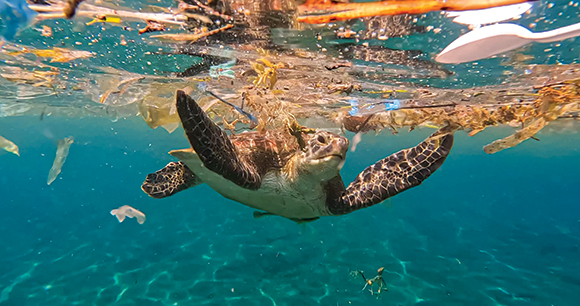
After opening ceremonies, the Kingston meetings kicked off with LBS COP7. Pollution from land-based sources is a major regional concern, with single-use plastics posing a particular problem. Parties shared stories, expertise, and mitigation techniques, stressing that only by working together can large-scale, meaningful progress be made. Recommended decisions regarding land-based pollution were forwarded to CC COP18 for agreement.
The second day was devoted to the SPAW Protocol, with review and proposed adoption of the SPAW STAC11 recommendations and the 2026–2027 Workplan and Budget of the SPAW Sub-Programme, all for subsequent approval at CC COP18. There was discussion about the establishment of the MM-RAN, with countries providing opinions on governance, transparency, reporting, host expertise, and procedures. The parties supported the concept that those interested in hosting the MM-RAN should submit a proposal for review by the SPAW Secretariat in coordination with the SPAW-RAC for provisional endorsement by parties prior to the next round of intergovernmental meetings. This decision, which AWI supports and applauds, was reported to CC COP18 for agreement.
After discussions about the upcoming workplan and budget, the status of activities, and working group operations, SPAW COP13 turned to compliance, a key concern of AWI’s. The parties agreed that the compliance process should be facilitative, nonpunitive, and cooperative and tasked the SPAW Secretariat with drafting a “concept note” (brief outline for discussion at a future meeting) on a suggested implementation and compliance mechanism.
A lengthy discussion then ensued on the issue of Sargassum. This brown macroalgae seaweed forms massive drifting mats that inhibit movement of marine animals and, when washed ashore, choke huge swathes of coastline. It is notoriously difficult to dispose of, can contain toxic chemicals, and negatively affects national economies by reducing fishing access and inhibiting tourism. At SPAW COP13, the parties recommended approval of the Cartagena Convention Action Plan on Sargassum Inundation and the State of the Convention Area Report, as well as establishment of a Cartagena Convention–level Sargassum Working Group to facilitate coordination and participation by both SPAW and LBS Protocol parties. The remainder of SPAW COP13 was taken up by presentations on emerging issues, including on the CAR-WEN and the Neotropical Songbirds Collaborative Group, which works to combat the trade in songbirds in the region, some of which are listed on SPAW Protocol Annex II (delineating animal species for which taking, possessing, killing, or commercially trading is prohibited under the protocol).
CC COP18 negotiations occupied the third and fourth days. An opening presentation by Christopher Corbin, the Cartegena Convention Secretariat’s coordinator, outlined the long-term strategy for the convention. While a number of parties approved of the strategy, the United States balked, saying it could not support direct references to climate change or the UN’s 30×30 target (set in 2022 as a global conservation goal to protect 30 percent of the Earth’s land and sea by 2030). After hurried negotiations, the language was tweaked so that “climate change” was replaced by “sea level rise” and “warming oceans.” The remainder of the meeting included debate over the exact language of decisions, with much tedious back and forth over precise wording. As is customary at UN treaty meetings, a round of applause ended the negotiations.
The meeting ended on a sad note with Corbin’s announcement that he was stepping down as coordinator. Corbin has been a dedicated and reliable representative of the Cartagena Convention Secretariat for over a dozen years, and his departure will be a big loss. After a fond farewell, the meeting closed and a new biennium for the Wider Caribbean began.
See more AWI Quarterly articles about: Human Activities and Threats, Marine Wildlife
See more AWI Quarterly articles of type: Feature Article


