Marine Pollution
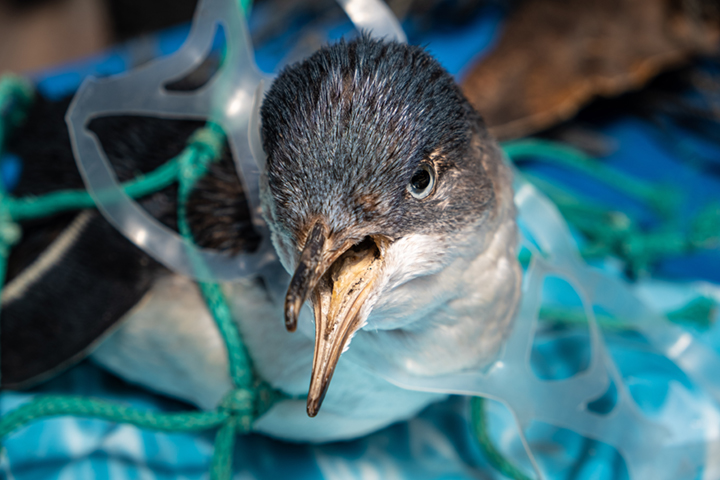
Photo by Greg Brave
Overview
When high-profile oil spills wreak havoc on marine animals and ocean ecosystems, the immediate impact is seen by many—via media images of oiled animals struggling to survive and beaches covered in tar. But much of the pollution we visit upon oceans and marine wildlife enters the water in less dramatic fashion and creates problems in less visible ways. Many pollutants collect out of sight in the ocean’s depths, where they are consumed by small marine organisms and introduced into the global food chain.
Common physical pollutants that reach the ocean include pesticides, herbicides, chemical fertilizers, detergents, oil, sewage, plastics, discarded fishing gear, and other solid debris. Soil itself can be a pollutant when it is dumped in large quantities into waterways. Topsoil or silt from fields, construction sites, or cleared forests can degrade or destroy aquatic wildlife habitats.
Much of the pollution comes from large industrial sources—such as farms, factories, and forests managed for timber. Pollutants are often released far upstream from coastlines. When, for example, nitrogen-rich fertilizers applied to inland farms end up in local streams, rivers, and groundwater, they are eventually deposited in estuaries, bays, and deltas, where they can spawn massive algal blooms that rob the water of oxygen. Once depleted of oxygen, that section of ocean becomes a dead zone, incapable of supporting much marine life.
Various small sources contribute cumulatively in big ways to marine pollution as well. Millions of motor vehicle engines deposit daily, one-drop-at-a-time “oil spills” onto roads and parking lots, which add significantly to runoff pollution. Chemicals can leak out of machine parts, batteries, and similar industrial waste, causing secondary pollution. Some water pollution actually starts out as particulate air pollution, which ends up in waterways and oceans.
Other types of physical pollution include trash and other discarded solids improperly disposed of on land or at sea. Solid debris can float, be suspended in the water column, or sink, depending on its physical characteristics. All can be problematic for marine life. Debris that sinks can have huge impacts on sensitive ocean floor communities, destroying coral and entangling wildlife. Discarded fishing nets drift for years, ensnaring fish and mammals, leading to exhaustion, starvation, and slow death.
In certain parts of our oceans, concentrations of floating marine debris are formed because of ocean currents and winds. These “garbage patches” mainly consist of small pieces of plastic that have ended up in the ocean from land sources and ships. Apart from being aesthetically unappealing and sometimes difficult to navigate through, floating debris may be mistaken for food and ingested by marine mammals, sea turtles, and sea birds. Ingestion of debris may lead to loss of nutrition, internal injury, intestinal blockage, starvation, and even death. Plastic debris can also break down into toxic components, which bioaccumulate in the food chain.
More recently, scientists have discovered that “microplastics”—plastic particles smaller than 5mm—have infiltrated the ocean, from surface waters to the sediment of the deep sea floor, and from the smallest microorganisms to the largest animals on earth: blue whales. As humans consume seafood, sea salt, and drinking water, and ingest airborne particles, microplastics are now showing up in humans, as well, with myriad known and yet to be discovered health impacts.
Human Activities and Threats
Recent News and Articles