Seafood Labeling and Certifications
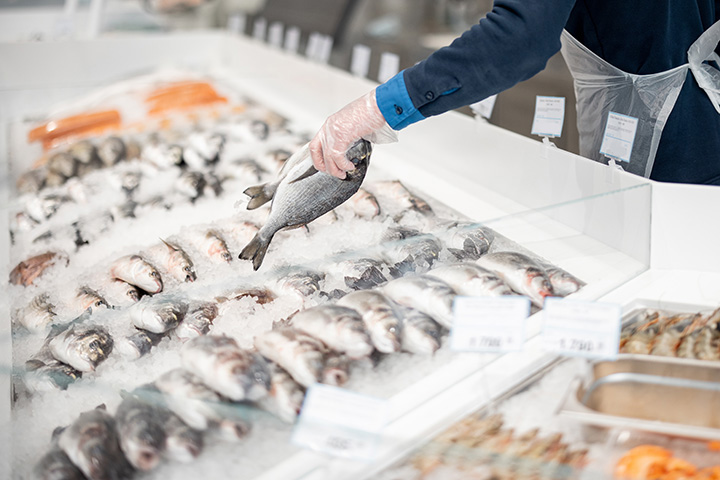
Photo by rh2010
Overview
The UN Food and Agriculture Organization (FAO) defines eco-certification as “a procedure by which a third party gives written assurance that a product, process, or service is in conformity with certain standards.” While certifications can potentially help guide those wishing to eat sustainably and humanely caught seafood, they are not a one-size-fits-all solution.
Take Action: Stop Congress from Gutting the Marine Mammal Protection ActMany certification programs claim to follow the FAO Guidelines for Ecolabelling of Fish and Fishery Products for Marine Capture Fisheries; however, these guidelines are voluntary and have not been updated since 2009 despite massive changes in both fishing methods and intensity. The guidelines, while focused on sustainability, do not address important welfare issues associated with the taking of target and bycaught species.
In the past decade, there has been a proliferation of eco-certification labels in the seafood industry, including labels overseen by nonprofit organizations, government agencies, and retailers. According to a 2020 SeafoodSource publication, there are more than 120 certifications for wild capture and aquaculture fisheries around the world. Each scheme has its own criteria and assessment processes, and the range of issues covered varies a great deal. Some labels assess fishing methods, while others look to the sustainability of fish stocks, ecosystem conservation, and bycatch.
While many aquaculture certifications now consider fish welfare concerns, welfare in wild-capture fishery certification has not received the same level of scrutiny. This is especially true of industrialized commercial fisheries. Trillions of fish, both target and nontarget, die each year in commercial fisheries, as do hundreds of thousands of nontarget seabirds, sea turtles, sharks, and cetaceans. Depending on the capture and slaughter methods used, fish can be crushed, asphyxiated, or frozen to death, and they are often slaughtered without any of the pre-slaughter stunning commonly required in terrestrial animal production. Even if released, bycaught animals are often injured, which can lead to horrifically long and painful deaths.
AWI reviewed leading wild capture certification programs and summarized three of the most widely recognized seafood eco-labels below:
“Dolphin-Safe” was the first seafood eco-labeling scheme for a commercial wild-capture fishery. It arose after undercover investigations in the late 1980s revealed massive dolphin kills in Eastern Pacific Ocean tuna purse seine operations. Following public outcry, tuna companies began promoting their use of “dolphin safe” fishing methods. In 1990, the US Congress passed the Dolphin Protection Consumer Information Act (DPCIA) as an amendment to the Marine Mammal Protection Act, regulating the use of the Dolphin Safe label on tuna cans. While initially aimed solely at tuna caught in the Eastern Pacific, the DPCIA now applies to tuna caught by purse seine vessels in other oceans as well.
Friend of the Sea (FoS) is an eco-certification program founded in 2008 as an outgrowth of the International Dolphin-Safe Tuna Program (IDSTP), a project run by Earth Island Institute. Both FoS and the IDSTP require seafood companies to ban intentional sets on dolphins to catch tuna, as well as prohibiting shark finning and the use of driftnets and gillnets. While IDSTP focuses solely on tuna production, FoS has expanded to cover more than 170 commercial fish species, including wild-caught and farmed species.
The Marine Stewardship Council (MSC) is perhaps the best-known seafood label. Established in 1997, the MSC’s “blue-tick” logo has gone global, with more than 20,000 seafood products certified and 66 countries taking part in the MSC program. Industry clients pay what are known as conformity assessment bodies (CABs) to assess their fisheries against the MSC standards. The fact that fishing companies can choose which CAB will review them and then pay that CAB for its assessment has been cited as a potential conflict of interest by several NGOs and academics. Bycatch of endangered species in MSC-certified fisheries has also been cause for concern, as has MSC’s certification of tuna fisheries that allow the deliberate encirclement of dolphins.
AWI advocates directly with seafood eco-certification programs to ensure that standards are effective at reducing bycatch, protecting animal welfare, and preserving marine biodiversity. Since 2018, AWI has been an active member of Make Stewardship Count, a coalition of more than 90 marine conservation experts, organizations, and researchers from around the world, striving to make sure that consumers can trust the labels on seafood products.
Consumers have a key role to play by demanding transparent, consistent, and trustworthy seafood certification standards. If you do buy seafood, be aware that definitions of sustainability and requirements for compliance vary from label to label, and even certified fisheries can be problematic. Tell your seafood retailers and certifiers that seafood products that are certified as sustainable or humane should be caught in a way that fully protects marine ecosystems and animal welfare. Retailers should also be diligent in ensuring the traceability of their products from ship to shelf and should make information on location of catch and gear type readily accessible.
Of course, the best way to avoid label confusion and help ensure the welfare of marine life is to choose from the growing number of plant-sourced “seafood” products.
Take Action for Marine Wildlife

Stop Congress from Gutting the Marine Mammal Protection Act
For over 50 years, the Marine Mammal Protection Act (MMPA) has safeguarded marine mammals from harm, preventing population declines and accelerating their recovery. By aiming to ensure that these animals remain at sustainable levels and continue to play vital roles in their ecosystems, the MMPA has been instrumental in marine conservation. Yet, despite its successes and long-standing bipartisan support, the law faces the most serious threat in its long history—draft legislation that, if enacted, would gut its core protections at a time when marine mammals need them most. Please write your members of Congress and urge them to defend this bedrock law and the remarkable species it protects.
Fish and Fisheries
Recent News and Articles