Alternative Fishing Gear
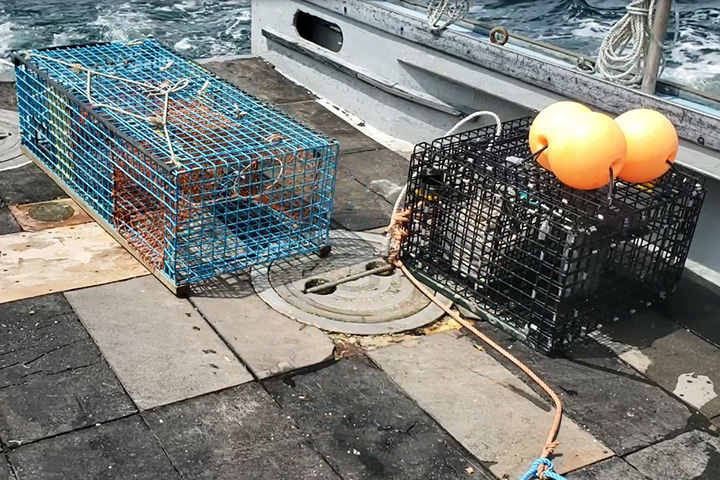
Photo by EdgeTech
Overview
AWI works with regulators, scientists, environmental groups, the fishing industry, and other partners to support the use of alternative fishing gear and practices that minimize bycatch of marine wildlife.
Take Action: Stop Congress from Gutting the Marine Mammal Protection ActImproving Practices
Fishing restrictions can reduce bycatch rates by ensuring fishers avoid areas or times of year when bycatch is most prevalent. Gear modifications can also greatly reduce unintended bycatch, such as “bycatch reduction devices” and “turtle excluder devices,” which allow nontarget animals such as sea turtles to escape from trawls. The use of circle hooks instead of traditional J-hooks has increased the number of marine animals that are successfully freed from longlines. Additional gear modifications include substituting hand lines for gillnets and using on-demand lobster and crab gear, which removes fixed vertical buoy lines that frequently entangle large whales. When gear modifications are not enough, phasing out or banning particularly harmful gear in favor of more selective methods may be necessary to ensure long-term ecological sustainability.
These improvements are most effective when implemented consistently across jurisdictional boundaries, particularly for highly migratory species. Furthermore, bycatch mitigation methods work best when paired with robust bycatch limits, consistent monitoring schemes, and strong enforcement mechanisms. Unfortunately, bycatch mitigation regulations vary greatly across nations.
Ropeless or On-Demand Fishing Gear
One method of alternative fishing in which AWI is particularly interested is ropeless fishing, also known as “on-demand” or “pop-up” fishing. Ropeless gear is a practical and effective alternative to using pots and traps to catch benthic species such as lobster and crab—a type of fishing that often entangles large whales in vertical lines used to mark buoys at the surface.
Instead of traditional vertical buoy lines, ropeless gear is stored entirely on the seafloor, such as in remote-release cages or lift bags. These systems keep lines out of the water column until the moment traps are remotely retrieved, reducing whale entanglements while allowing fisheries to continue operating. Fishers use acoustic or GPS markers to locate their gear and trigger it to surface. This approach not only enables fishing in areas that would otherwise be closed to protect whales, but also reduces gear loss from weather, vessel strikes, and theft, cutting costs and limiting marine debris.
Although significant progress has been made to ramp up the use of ropeless gear in certain countries, broader adoption is still needed. Fishers need more opportunities to test ropeless systems and adapt them to their operations, and additional funding is necessary to ensure that the cost of transitioning does not fall disproportionately on fishing communities. Continued development of management, enforcement, and manufacturing capacity will help make the technology more accessible and affordable, ultimately supporting safer fisheries and healthier oceans. Visit The Future Is Ropeless to learn more about ropeless fishing gear and what you can do to help.
Take Action for Marine Wildlife

Stop Congress from Gutting the Marine Mammal Protection Act
For over 50 years, the Marine Mammal Protection Act (MMPA) has safeguarded marine mammals from harm, preventing population declines and accelerating their recovery. By aiming to ensure that these animals remain at sustainable levels and continue to play vital roles in their ecosystems, the MMPA has been instrumental in marine conservation. Yet, despite its successes and long-standing bipartisan support, the law faces the most serious threat in its long history—draft legislation that, if enacted, would gut its core protections at a time when marine mammals need them most. Please write your members of Congress and urge them to defend this bedrock law and the remarkable species it protects.
Fish and Fisheries
Recent News and Articles