Extreme Weather
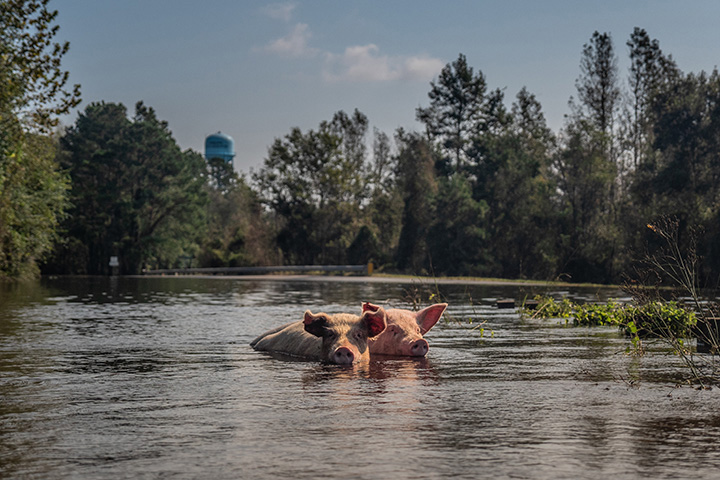
Photo by Kelly Guerin/We Animals
Overview
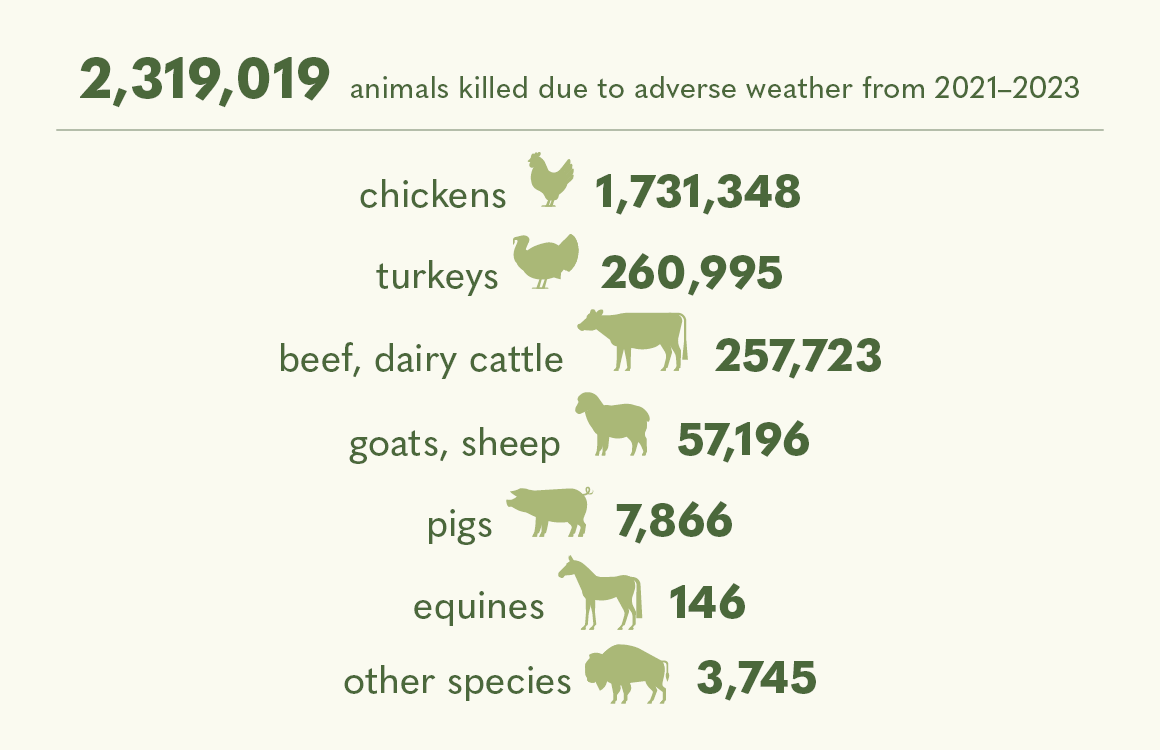
Each year hundreds of thousands of farmed animals are killed in the aftermath of extreme weather events. From heat to cold, hurricanes to flooding, storms, and wind, weather can be deadly for farmed animals.
During the summer months, heat waves and high temperatures put all farmed animals, whether housed outdoors or confined in large buildings, at risk for heat stress and hyperthermia. Throughout the winter, extreme cold, wind, and snow leave animals housed outdoors—particularly cattle, sheep, and goats—vulnerable to cold-weather-related injuries and illnesses, such as frostbite and hypothermia. Severe storms and hurricanes that are accompanied by excessive flooding and high winds have also proven deadly for farmed animals, killing millions of birds and thousands of pigs in recent years.
Emergency Preparedness for Animals
Events such as these highlight the need for farmers and ranchers to develop comprehensive disaster plans that can help save the lives of countless farmed animals. Plans should include:
- strategies for either evacuating animals or providing emergency shelter or housing,
- ways to ensure animals will have access to feed and water during and after extreme weather events, and
- options for providing veterinary care should any animals need it.
Livestock Indemnity Program
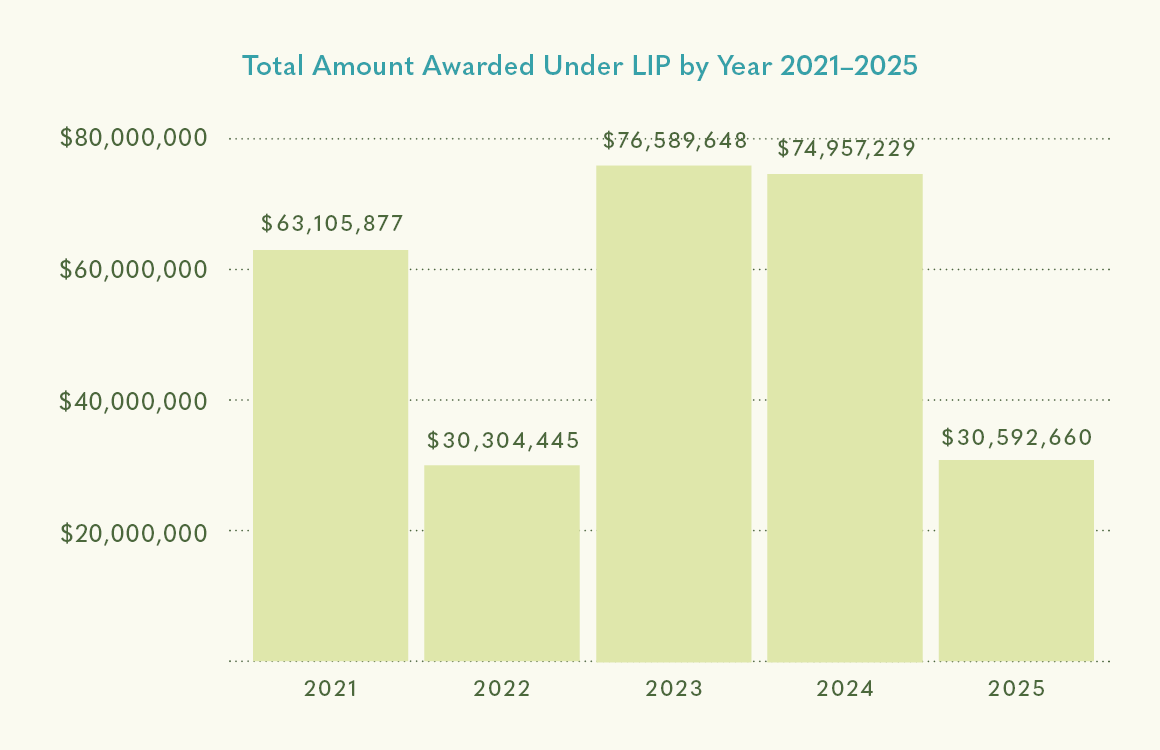
In response to the economic concerns associated with losing livestock to extreme weather, the Livestock Indemnity Program (LIP) was first created in 1997 to compensate farmers for livestock deaths caused by cold weather events and blizzards. Since then the program has been expanded to cover other extreme weather events such as hurricanes and floods. According to records obtained through FOIA, for 2021-2025 alone, the total amount awarded under LIP reached over $275 million.
Despite such a large price tag, farmers are not required to demonstrate that they provided their animals with basic protection from extreme weather, or that they have even developed a disaster plan, before receiving compensation under LIP. AWI has been working to change this, and although such precautions are still not mandated under LIP, the USDA—thanks in part to AWI’s efforts—is now required to work with farmers and ranchers who wish to develop disaster plans to prevent livestock deaths and injuries.
AWI will continue to urge members of Congress and the USDA to require the development and execution of disaster plans under LIP in order to protect farmed animals in the event of extreme weather or natural disasters.
Animals on Factory Farms
Recent News and Articles