Illinois Bill Introduced to Protect Public Health from Disease Risks on Fur Farms
February 3, 2026 in Animals on Factory Farms, Farmed Animals
Washington, DC—The Animal Welfare Institute (AWI) lauds today’s filing of the Finding Urgent Relief from Vectors for Infection Risk and Unchecked Spillover (FUR VIRUS) Act in Illinois, which would implement crucial disease prevention measures by licensing existing fur farms and preventing the establishment of new fur farms in the state.
Sponsored by State Rep. Theresa Mah (D-24), Majority Conference Chair in the House of Representatives, H.B. 4777 recognizes that mink, foxes, and other animals confined on fur farms incubate diseases such as SARS-CoV-2 (the virus that causes COVID-19) and H5N1 (the virus that causes avian influenza), creating prime conditions for new variants to jump to humans—with potentially devastating results.
Tens of thousands of captive mink in the United States, and millions worldwide, have been infected with SARS-CoV-2, and there have been documented cases of mink on fur farms transmitting a variant of the virus to humans. Furthermore, foxes, mink, and other animals on fur farms have been infected with H5N1. On at least one fur farm, the virus gained a mutation that favors mammal-to-mammal spread.
While there are fur farms in Illinois that raise and slaughter animals for their pelts, the exact number of farms is unknown. These facilities are not licensed or tracked by the state or federal government, which enables them to operate without meaningful oversight regarding disease and safety protocols.
The FUR VIRUS Act would require fur farms in Illinois to obtain a license from the Illinois Department of Natural Resources, preventing these facilities from continuing to operate without transparency. The bill would also end the establishment of new fur farms due to the extensive scientific research conducted during the SARS-CoV-2 and H5N1 outbreaks demonstrating that these farms jeopardize public health.
“I am proud to sponsor the FUR VIRUS Act. The science is clear—fur farming poses an unacceptable risk to human health,” said Mah. “This bill ensures that officials have the information they need to respond swiftly to disease outbreaks, and that Illinois avoids additional opportunities for zoonotic disease exposure. By passing the FUR VIRUS Act, Illinois will be a leader in implementing commonsense pandemic prevention measures.”
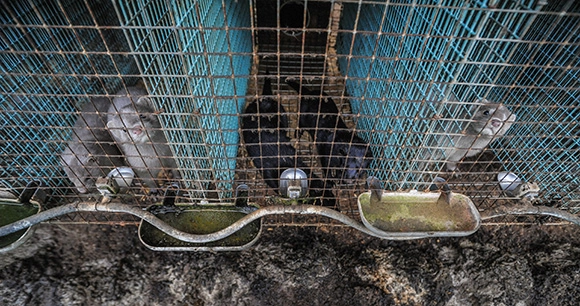
Fur farms house large numbers of animals in pens or cages in close proximity to each other, which promotes disease transmission. Due to the cramped and unnatural conditions, the animals typically experience extreme stress, which increases the potential for infection and the transmission of viruses for extended periods. This risk is further exacerbated by on-site slaughter practices that can create additional points of exposure, as well as an absence of legal requirements for veterinary care.
“We cannot ignore the documented instances of disease proliferation on fur farms, and the very real risk of human infection,” said Kate Dylewsky, AWI’s assistant director of government affairs. “The public health concerns associated with fur farms are multifaceted, and for far too long, these farms have operated without any meaningful oversight. It’s time to protect Illinois citizens by regulating existing farms and ensuring that no new ones are established in the state.”
Media Contact Information
Kim Meneo, Animal Welfare Institute
kim@awionline.org, (202) 446-2116
About AWI
The Animal Welfare Institute (awionline.org) is a nonprofit charitable organization founded in 1951 and dedicated to alleviating animal suffering caused by people. We seek to improve the welfare of animals everywhere: in agriculture, in commerce, in our homes and communities, in research, and in the wild. Follow us on Facebook, Instagram, Threads, Bluesky, and LinkedIn for updates and other important animal protection news.
Latest AWI Quarterly Articles
See All Farmed Animals AWI Quarterly Articles