Fishing Methods
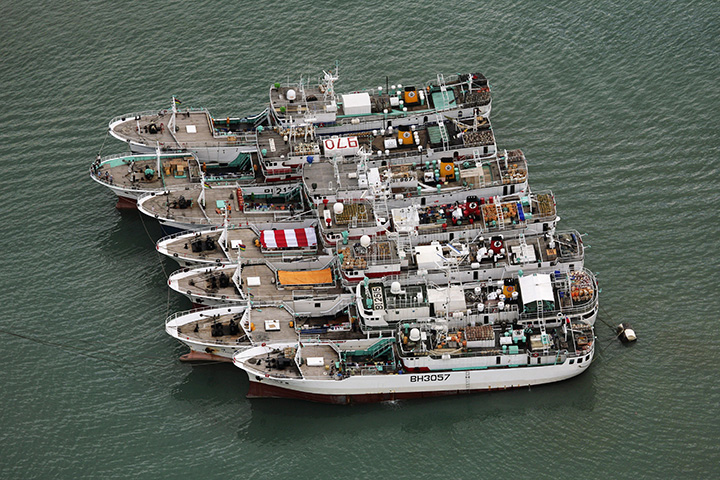
Photo by Photo by FB-StockPhoto-2
Overview
Many fishing methods have negative impacts on marine life and ecosystems. Some of the most destructive include the use of gillnets, longlines, trawls, pot and trap gear, purse seines, and explosives.
As a result of poor fishing methods, millions of nontarget animals die every year as bycatch—hauled up and thrown overboard, dead or mortally wounded. Air-breathing marine mammals, sea turtles and seabirds are particularly vulnerable because they can quickly drown when trapped in fishing nets. Animals who manage to break free may still end up dragging a portion of the net with them, causing life-threatening injuries, interfering with behaviors necessary for survival, and making them vulnerable to predators.
Take Action: Stop Congress from Gutting the Marine Mammal Protection ActTo meet increased demand, humankind has turned to farming fish within artificial enclosures. Production of species from aquaculture has now surpassed that from wild-capture fisheries. Far from being a solution to overfishing, however, many of the methods used in industrial aquaculture are inhumane and environmentally destructive, as well, adding to rather than easing the burden on ecosystems. As with industrial agriculture on land, the rearing of fish in close quarters can have severe animal welfare implications.
Gillnets
Gillnets are designed to allow fish to get only their heads through the net, causing their gills to catch as they try to free themselves. The more the fish struggle, the more they become ensnared. There are two main types of gillnets: Set gillnets are attached to an anchor system or pole set into the ocean floor, while drift gillnets float via a system of weights and buoys. Gillnet fisheries are the leading cause of global marine mammal bycatch and are a main driver of population declines for many marine species, including sharks and sea turtles.
Gillnet fisheries were partly responsible for the extinction of the baiji dolphin. They are also the leading cause of decline of the world’s most endangered cetacean species, the vaquita. This porpoise, endemic to the Gulf in Mexico, is currently listed as endangered under the US Endangered Species Act and critically endangered by the International Union for Conservation of Nature’s Red List of Threatened Species.
Driftnet Fishing
Driftnets are gillnets that are allowed to drift near the surface of the water, trapping fish as nets slide behind their gill covers. Driftnets are used to capture many types of fish, including tuna, swordfish, and salmon. These nets were traditionally small in size, biodegradable, and attached to small vessels. Present day driftnets, however, are made of nylon and can measure up to 50km (31mi) in length. The tops of driftnets are equipped with floats, and weights are attached to the bottoms—creating a vertical wall in the water.
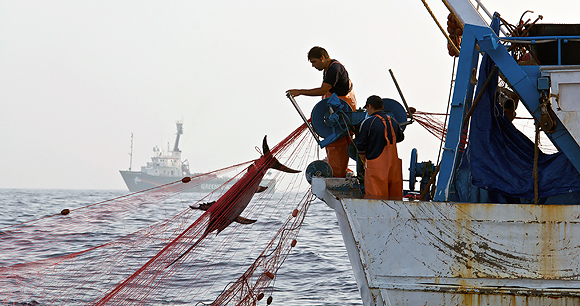
Because driftnets are nonselective, vast numbers of nontarget animals perish in them as bycatch. In some cases, several days pass before the driftnets are retrieved—too late for air breathing animals caught in the nets to be freed. Unintended victims of driftnets include whales, dolphins, sea turtles, seals, sea lions, and seabirds, some of which are endangered species.
Driftnets are particularly dangerous when they become “ghost nets” that have been abandoned or lost by fishers. Since the nets are made of highly resistant nylon, they can linger in the environment, entangling marine wildlife for months.
The United Nations called for an end to the use of large-scale pelagic driftnets in the 1990s, and the Convention for the Conservation of Atlantic Tunas recommended a ban on driftnet use in the Mediterranean Sea in 2003. The European Union has restricted the possession and use of driftnets longer than 2.5 km (1.5mi). In December 2022, the federal Driftnet Modernization and Bycatch Reduction Act was signed into law, mandating a phase-out of the US West Coast’s large-scale driftnet fishery—the last such fishery in the United States’ exclusive economic zone—within five years.
However, illegal driftnet use continues. For example, hotspots of illegal driftnet use have been found in the northern Indian Ocean, while an investigative report found that illegal driftnet use in Moroccan waters skyrocketed from 370 vessels in 2004 to 846 in 2024.
Longline Fishing
Longlining is a fishing technique which involves placing thousands of baited hooks on a fishing line that can stretch for several miles.
This technique gained popularity in the 1980s, with the growing demand for highly valued fish such as tuna, mackerel, and swordfish. Unfortunately, these fish are not the only creatures who are caught and killed on longlines. The bait also entices marine mammals, sea turtles, seabirds, sharks, and nontarget fish species. In 2025, the captain of a Taiwanese longline vessel was indicted for instructing his crew to kill dolphins for use as bait for attracting sharks, similar to incidents in other shark fisheries.
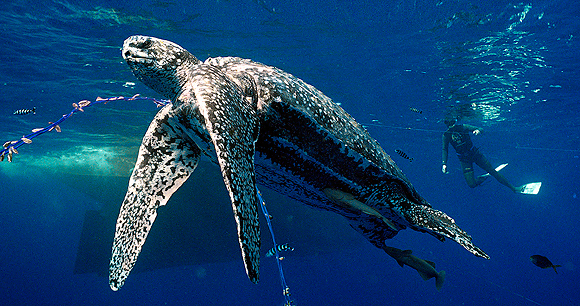
Gear modifications and temporary prohibitions can reduce the number of bycaught animals taken by the longlining industry. For example, in 2004, the Pacific Fishery Management Council (PFMC) prohibited the use of longlines out to 200 miles off California, Oregon, and Washington. The decision by the PFMC helped protect countless species. The use of circle hooks rather than traditional J-hooks has also increased the number of turtles and other marine animals that have been successfully freed from longlines.
Pot and Trap Gear
Pots and traps take the form of cages or baskets and vary widely in size according to the species targeted. They are used to catch a variety of animals such as lobsters, crabs, octopuses, and shellfish. Most are designed to be set on the seafloor and attached via vertical ropes to a buoy on the surface. Both the lines connecting pots or traps to each other (groundlines) and to surface buoys (vertical lines) can entangle marine mammals. Whales, dolphins, and porpoises who become entangled in these lines may experience a range of injuries, sometimes leading to death after prolonged suffering.
Purse Seine Fishing
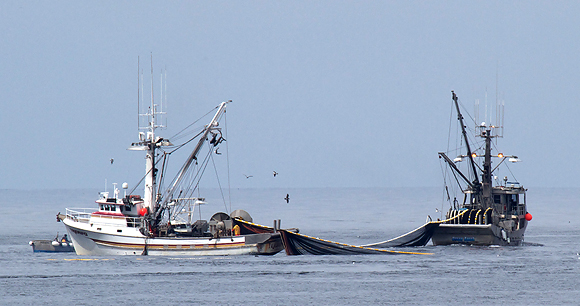
A purse seine, which is attached to a boat, is a weighted net that hangs vertically in the water with floats on the top and rings on the bottom with a rope running through them. When a fishing vessel encircles a school of fish, the rope is tightened, preventing the fish from escaping. This fishing method is commonly used to capture fish that travel in schools close to the surface, such as certain species of tuna, sardines, herring, and salmon.
In the 1950s, fisherman in the Eastern Tropical Pacific Ocean (ETP) discovered that large yellowfin tuna congregate under pods of pantropical spotted, spinner, and common dolphins. After herding the dolphins into a tight group using speed boats, they surround them with a purse seine net, which encloses the dolphins and the tuna below when pulled tight. This chase traumatizes and confuses the dolphins. Although dolphins are either removed from the net by divers or are herded out over a dropped portion of the net in what is known as the backdown procedure, not all survive encirclement; those that do can endure this unpleasant capture and release many times throughout their lives. The stress caused by repeated encirclement has the potential to cause calf mortality, decreased fecundity, and a disruption of social behaviors. In the l990s, following a series of US tuna embargoes and boycotts, nations engaged in purse seining in the ETP ratified a legally binding treaty known as the Agreement on the International Dolphin Conservation Program. This treaty called on countries to progressively reduce dolphin kills in the ETP to levels approaching zero, and to search for fishing methods that do not involve encircling dolphins. This helped reduce the number of dolphins dying each year in the ETP from over 100,000 in the mid-1980s to under 1,000 by the mid-2020s.
Dolphin encirclement as a means to catch tuna is practiced in other oceans as well, albeit on a lesser scale than in the ETP. The Western and Central Pacific Fisheries Commission prohibits setting purse seine nets on cetaceans and encourages fleets to safely release dolphins taken as bycatch. In 2023, the Indian Ocean Tuna Commission banned the deliberate encirclement of cetaceans by purse seiners, as well as by vessels using gillnets.
The US government does not allow the “dolphin safe” tuna label to be used by tuna fleets that deliberately encircle dolphin to catch tuna. In March 2026, two US seafood importers were fined a combined total of $220,000 for falsely labeling millions of pounds of tuna as dolphin safe.
Trawl Fishing
Trawling is another fishing technique that results in high numbers of bycatch. The two trawling methods are pelagic (“mid-water”) and bottom (“demersal”) trawling. Bottom trawling, the more environmentally destructive of the two, involves dragging a funnel-shaped weighted net along the seafloor. The net is equipped with a mechanism to disturb the seabed and is designed to sweep up everything in its path. This method is indiscriminate, uncontrollable in the numbers of organisms netted, and extremely destructive to ancient and fragile seabed communities.
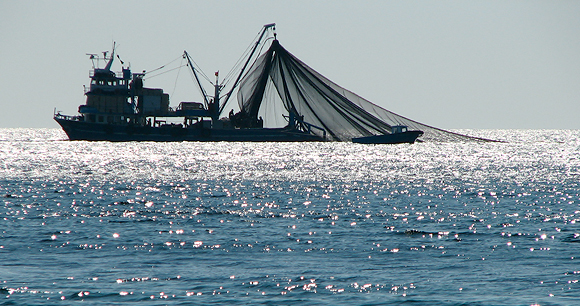
Deepwater coral communities and sea mounts are being devastated by bottom trawls, an activity that has been compared to the clear-cutting of rainforests. Corals are among the oldest living animals on the planet and are slow-growing organisms; some species grow only a millimeter a year. When coral communities are damaged, they are lost for generations. In addition, bottom trawls may be extinguishing endemic communities of sponges, crustaceans, fish, and other species that we have yet to even discover. Bottom trawling also releases carbon from seabed sediments, which contributes to both climate change and ocean acidification.
Shrimp trawls in particular are notorious for their high level of bycatch, catching animals ranging from fish to endangered sea turtles. The unwanted dying or already dead bycatch is commonly discarded back into the water. Gear modifications such as “bycatch reduction devices” and “turtle excluder devices” reduce unintended bycatch by allowing animals an escape. Unfortunately, laws and their enforcement mandating these devices vary greatly across nations.
Pelagic (or mid-water) trawls are designed to catch large schools of fish such as tuna, sea bass, and anchovies by dragging a net higher in the water column. This, however, results in a high level of cetacean bycatch. Dolphins are the most common bycatch victims because the fish species targeted by these trawls are also important prey sources for the dolphins.
Blast Fishing
Although illegal in most places, this method—also called explosive or dynamite fishing—is practiced by fishers in Southeast Asia, Africa, and the Aegean Sea.
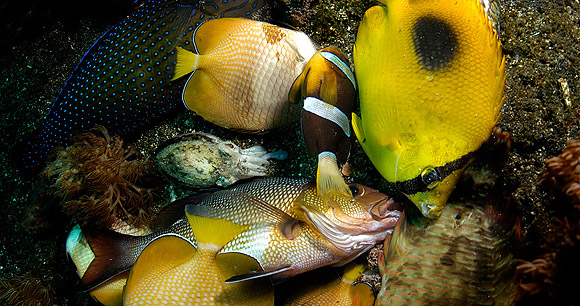
These fishers set explosives in the water to stun entire schools of fish at once. Shockwaves from the explosions can be very damaging to the surrounding environment, especially to sensitive coral reefs. The explosives are usually homemade and may contain pollutants such as kerosene and fertilizers, further degrading the environment. The explosions can instantly transform dynamic ecosystems into empty, lifeless deserts.
Take Action for Marine Wildlife

Stop Congress from Gutting the Marine Mammal Protection Act
For over 50 years, the Marine Mammal Protection Act (MMPA) has safeguarded marine mammals from harm, preventing population declines and accelerating their recovery. By aiming to ensure that these animals remain at sustainable levels and continue to play vital roles in their ecosystems, the MMPA has been instrumental in marine conservation. Yet, despite its successes and long-standing bipartisan support, the law faces the most serious threat in its long history—draft legislation that, if enacted, would gut its core protections at a time when marine mammals need them most. Please write your members of Congress and urge them to defend this bedrock law and the remarkable species it protects.
Fish and Fisheries
Recent News and Articles