Mink Farming
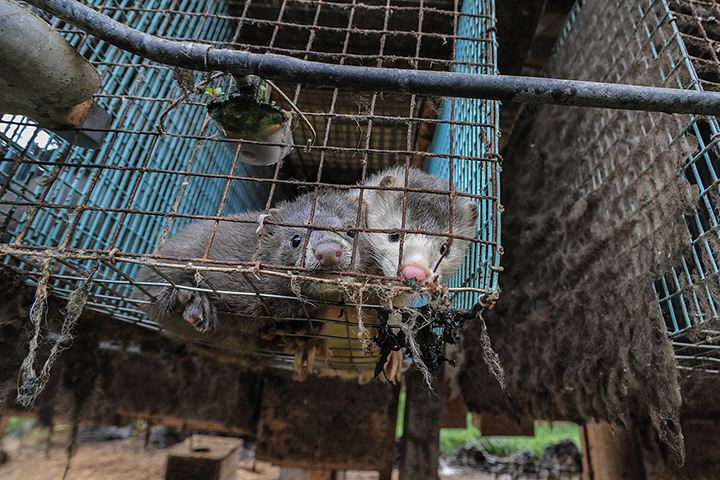
Photo by Jo-Anne McArthur/Djurrattsalliansen/We Animals
Overview
Mink fur farming inflicts severe suffering on animals while creating dangerous conditions for the emergence and spread of infectious diseases, including mutated forms of COVID‑19 and avian flu. As other nations move to restrict or phase out this high‑risk industry, the United States faces growing urgency to address the public health threats and financial waste associated with mink farms.
Take Action: Take Action to End Mink Fur FarmingBackground
Approximately 85 percent of the fur used in coats, scarves, wraps, and other fashion items is derived from animals in fur farms, primarily mink. Like other industrial animal operations, mink farms typically involve thousands of animals intensively confined in long rows of barren pens barely large enough for the animals to move around.
The extreme crowding and confinement on fur farms lead to serious physical and mental health problems for the animals, including infections, severe wounds, self-mutilation, cannibalism, and other stress-related stereotypical behaviors. The absence of legal requirements for veterinary care only compounds the problem.
Slaughter methods are similarly inhumane. When animals’ pelts are at their peak quality (within the first year of life), mink are gassed, electrocuted, or bludgeoned to death—or their necks are broken.
Public Health Hazard
Like humans, mink can become infected with COVID-19 without showing symptoms, thus possibly serving as an undetected reservoir of the disease. Escapees from fur farms can also transmit the virus to wild populations, potentially fostering new reservoirs of the virus. In December 2020, a wild mink captured near a mink farm in Utah tested positive for a variant of COVID-19 indistinguishable from the virus found in infected mink in a nearby farm—demonstrating the broader dangers posed.
Mink farms are also a public health hazard, creating an ideal setting for pathogens to circulate among and across species. Mink are highly susceptible to SARS-CoV-2 (the coronavirus that causes COVID-19), with outbreaks on hundreds of mink fur farms across at least a dozen countries. Alarmingly, COVID-19 has infected millions of farmed mink, and, in several instances, mink have passed a mutated form of this virus back to humans. Scientists determined that “spillback” from farmed mink to humans can introduce new variants, undermining the effectiveness of vaccines and jeopardizing public health.
In a 2023 paper published in Proceedings of the National Academy of Sciences, infectious disease experts at Imperial College London concluded that mink farming poses a high risk for future viral pandemics and stated, “We strongly urge governments to … consider the mounting evidence suggesting that fur farming, particularly mink, be eliminated in the interest of pandemic preparedness.”
Meanwhile, a deadly avian flu virus (H5N1) has infected tens of thousands of mink on dozens of fur farms since 2022. During an October 2022 outbreak on a mink farm in Spain, the virus gained at least one mutation that favors mammal-to-mammal spread, allowing it to be transmitted from mink to mink. (Before this outbreak, mammals were known to contract the virus primarily from infected birds, not from other mammals.) Scientists sounded the alarm, calling the outbreak a “clear mechanism for an H5 pandemic to start” and “a warning bell.” The potentially dire ramifications of H5N1 mutating into a form transmittable between humans means that we must take every precaution possible to prevent that outcome.
Domestic and International Response
In a major move, the European Union banned the keeping and breeding of American mink in the EU as of July 2027. The new regulations mandate that EU countries support fur farmers as they transition away from the industry through compensation, training, and reemployment programs. In 2021, Israel became the first country to ban the sale of most fur products. The swift measures taken by these governments to address the serious public health risk posed by mink farms are appropriate and proportional to the scale of the crisis.
Yet, in the United States, few federal or state regulations governing mink or other fur farms exist. Animals raised for their fur are not afforded the protections of the Animal Welfare Act, the Humane Methods of Slaughter Act, or the Dog and Cat Fur Protection Act.
In addition, US taxpayer dollars have been used to prop up mink farms, subsidizing an industry that was already in decline before the COVID-19 pandemic. Lack of consumer demand, coupled with state and local bans and fur-free commitments from major fashion brands, has significantly shrunk industry profits.
To eliminate a severe public health threat and end this financial waste, AWI spearheaded the introduction in 2023 of the “Mink: Vectors for Infection Risk in the United States Act” (Mink VIRUS Act). Sponsored by Rep. Adriano Espaillat (D-NY), this bill would establish a one-year phaseout of mink fur farms in the United States and create a grant program to reimburse mink farmers for the full value of their farms. Mink are wild creatures meant to run, swim, hunt, construct dens, raise their young, and interact naturally with other members of their species—not spend their lives suffering in a cramped cell.
Take Action for Farmed Animals
Take Action to End Mink Fur Farming
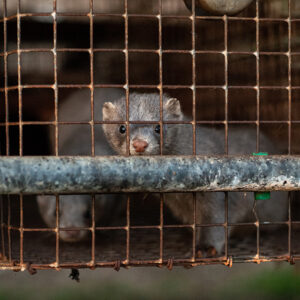
A growing body of science indicates that mink on fur farms incubate respiratory diseases that can be passed to humans. The crowded conditions on fur farms, where wire cages are packed together and the mink are highly stressed, heighten the risk of disease spread. Please urge your representative to cosponsor the Mink VIRUS Act (H.R. 2185) to protect both mink and human health. This legislation would phase out mink farming in the United States over one year and establish a grant program to reimburse mink farmers for the full value of their farm so that they’re able to transition to another industry.
Animals on Factory Farms
Recent News and Articles