Commercial Whaling
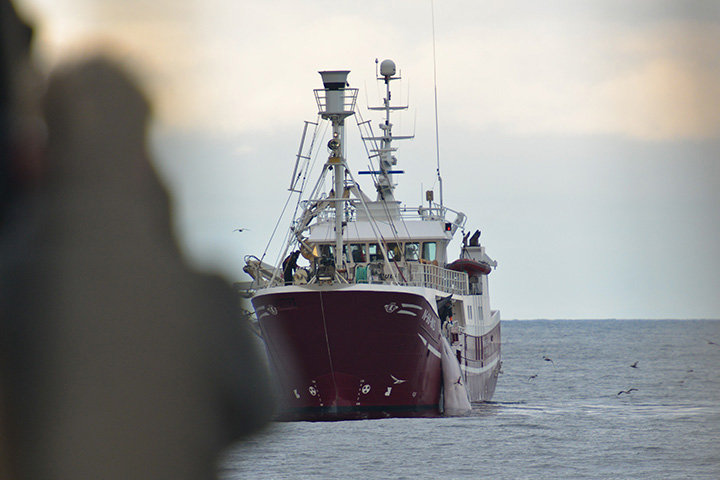
Photo by N. Seeliger
Overview
In 1982, the International Whaling Commission agreed to a global prohibition on commercial whaling, known as the moratorium, but the IWC was unable to prevent Norway, Iceland, and Japan from continuing to hunt as they took advantage of two provisions of the moratorium that allow governments to exempt themselves and issue special permits.
Take Action: Stop Congress from Gutting the Marine Mammal Protection ActIcelandic Whaling
Iceland, a major whaling nation since the early 20th century and a founding member of the IWC, did not legally object to the prohibition on commercial whaling adopted by the International Whaling Commission (IWC) in 1982 and was thus bound by the ban.
Iceland continued to hunt whales after the IWC’s moratorium took effect under the “special permit” provision that allows whaling on otherwise protected species for “scientific research.” Iceland killed an average of 90 whales per year until 1990, exporting most of the products to Japan. In 1992, Iceland withdrew from the IWC but rejoined in 2002 in a controversial decision (it cast the decisive vote on its own membership) and lodged a reservation to the moratorium—a move disputed by many countries as being contrary to international law.
Iceland also registered a reservation to the ban on international commercial trade in whale products when it joined the Convention on International Trade in Endangered Species of Wild Fauna and Flora (CITES) in 2000. This allows it to continue to trade internationally in whale meat with other CITES parties holding the same reservation, namely Norway and Japan, as well as non-Parties to CITES such as the Faroe Islands.
Iceland resumed special permit whaling in 2003, killing a total of 200 minke whales over the next five years under the guise of scientific research. In 2006, it also resumed commercial whaling under its reservation to the moratorium, targeting fin as well as minke whales. Since that time, around 700 fin whales and more than 400 minke whales have been killed by Icelandic whalers even though there is no demand for fin whale meat in Iceland, and most minke whale meat is served to tourists.
In August 2022, Iceland’s minister of food, agriculture and fisheries issued a new whaling welfare regulation requiring the Food and Veterinary Authority (MAST) to carry out regular inspections of whaling hunts to promote improved animal welfare during whaling. The results of inspections that year were staggering. Of the 58 whales whose deaths were analyzed, 41 percent did not die instantly, and the median time to death for those whales was 11.5 minutes. Two whales took more than an hour to die.
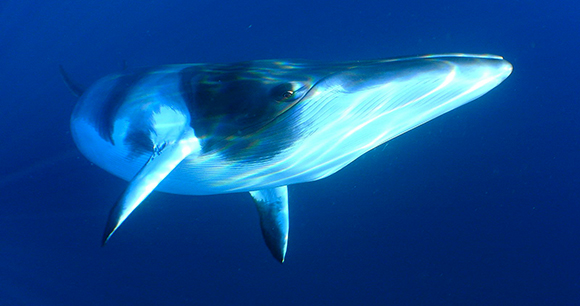
In response to these horrific results, MAST tasked an Expert Advisory Board on Animal Welfare with evaluating whether fin whaling can ever comply with Iceland’s Animal Welfare Act. The opinion of the board was submitted to the Ministry of Food, Agriculture and Fisheries on June 19, 2023, and its conclusion was that the methods employed in hunting large whales do not meet the law’s requirements. On June 20, Minister Svavarsdóttir announced that she was suspending the hunting of fin whale until August 31, 2023, and stated, “This activity cannot continue in the future if the authorities and the license holders cannot ensure the fulfillment of the welfare requirements.”
Despite these concerns, outgoing Prime Minister Bjarni Benediktsson issued a five-year permit for both fin and minke whaling in December 2024. Although no commercial whaling took place in 2025, these permits remain valid as of 2026. The new company that owns the minke whaling vessel Halldor Sigurðsson has indicated it hopes to resume whaling, as has Hvalur.
Japanese Whaling
Japan has a history of small-scale coastal whaling that stretches back many centuries, but large-scale whaling likely did not start until around the late 17th century. By the middle of the 20th century, Japan—along with its European and American counterparts—was a leading industrial whaling nation. Japan was not an original member of the International Whaling Commission (IWC), but joined in 1951 after it resumed whaling at the end of World War II at the encouragement of the United States. When the IWC agreed in 1982 to impose a commercial whaling moratorium, Japan, like Norway, registered a legal objection that exempted it from the decision. Under pressure from the United States, Japan withdrew this objection in 1985, but from 1987 to 2019 it conducted “special permit whaling” which is allowed under the IWC’s founding treaty to foster scientific research but was never intended as a means to facilitate commercial whaling.
Japan’s Scientific Whaling
The Japanese government operated two large-scale “special permit” programs in defiance of the IWC’s moratorium. The largest, in the Antarctic, killed 333 minke and 50 fin whales a year at its peak (despite the Southern Ocean being declared a whale sanctuary by the IWC in 1994; Japan formally objected to this designation). The program in the North Pacific originally targeted minke whales in Japan’s coastal waters, using small whaling boats that operate up to 50 miles from shore and return to port daily. This expanded to an offshore hunt of endangered sei whales (the second largest whale species), Bryde’s whales, and, for a few years, sperm whales, using the same factory fleet deployed in Antarctica—a mother ship that processed and froze the meat onboard and up to five catcher boats that harpooned the whales and delivered them to the mother ship’s slipway.
The whaling fleet delivered biological samples (such as eyeballs, ovaries, and stomach contents) from both programs to the Institute of Cetacean Research (ICR), a quasi-governmental institution that devised the research program, oversaw and funded the hunt, and conducted perfunctory research. The ICR then sold the rest of each whale, amounting to tens of thousands of tons of meat and blubber a year, to wholesalers for sale to shops, restaurants, and fish markets, or distributed it for promotional purposes, including through school lunch programs and other government-funded marketing schemes. The sales proceeds contributed to the following year’s hunt but were never sufficient to pay all the costs, and the hunts had to be underwritten by government subsidies of up to US$50 million a year.
It was no secret that the research programs were a scientific sham. Finally, in 2014, the International Court of Justice (ICJ) ruled in a case brought by Australia and New Zealand that Japan’s Antarctic whaling program was “not for the purposes of scientific research” and therefore violated the International Convention for the Regulation of Whaling. The court ordered Japan to immediately cease its whaling program in the Antarctic. Japan complied with the order to stop hunting in 2014 but then adjusted and relaunched both research programs in 2015. It ended its hunts of fin, Bryde’s, and sperm whales but increased its minke and sei whale takes.
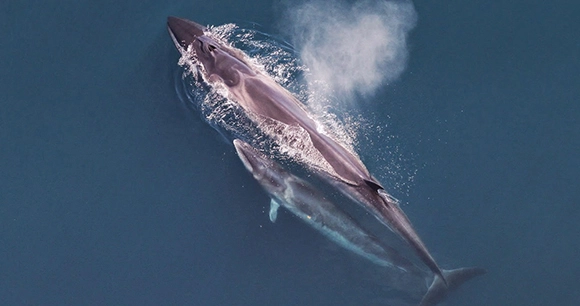
Despite cosmetic changes to the research, the commercial objectives of both programs were still clearly predominant, and the increase from 90 to 134 of sei whales taken annually beyond Japan’s exclusive economic zone (EEZ) prompted a legal challenge under the Convention on International Trade in Endangered Species of Wild Fauna and Flora (CITES). CITES prohibits international trade in the parts and products of large whales for primarily commercial purposes and defines international trade to include the landing of specimens caught on the high seas. In 2018, the CITES Standing Committee ruled that Japan’s “introduction from the sea” of thousands of tons of edible sei whale products each year was for primarily commercial purposes and violated the convention. Japan responded by limiting its sei whale hunt to within its EEZ but still has not inventoried and confiscated the possibly thousands of tons of sei whale meat that, beginning in 2002, was illegally landed and which remain in freezers.
Japan Leaves the IWC
In 2019, after repeatedly failing to convince the IWC to lift the commercial whaling moratorium, Japan left the IWC to conduct whaling outside international control. The government now authorizes commercial whaling in its coastal waters and EEZ, setting quotas each year for around 145 minke whales—typically taken exclusively by coastal whalers—and around 150 Bryde’s, 56 sei, and (since 2024) 60 fin whales by its factory ship, although catches of minke and sei whales are usually lower than the total allowable catch.
The new commercial hunts yield approximately 40 percent less meat than Japan’s research whaling, but consumption of whale meat in Japan has declined by almost 99 percent since 1962, and even this reduced quantity is proving hard to sell. Kyodo Senpaku, the company that conducts the whaling and sells the meat, remains dependent on annual government subsidies of about 5 billion Yen (about US$30 million), although the government has indicated that these subsidies will be withdrawn in a few years and that the industry must become self-sustaining.
Imports of Whale Meat
On top of the tens of thousands of tons of meat provided by its own hunts, Japan has imported more than 17,000 metric tons of whale meat and blubber from fin whales caught in Iceland since 2008 and smaller quantities from Norway. However, Iceland did not hunt any fin whales in 2019, 2020, 2021, 2024, and 2025, and—in the face of uncertainty about the Japanese market— has not exported any whale meat to Japan since December 2022.
Norway relies increasingly on the Japanese market as its own domestic consumption of whale meat declines. One Norwegian company has even established a branch in Japan to which it has exported hundreds of tons of whale meat and blubber that is sold alongside Japanese meat bought from Kyodo Senpaku and the ICR.
Norwegian Whaling
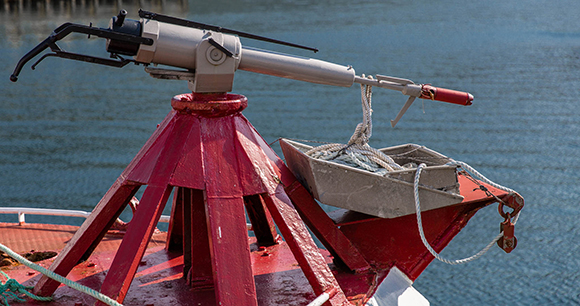
Norway has hunted whales in its own waters for centuries, but key technological advances, such as the exploding harpoon cannon, developed by its whalers in the 19th century, enabled the expansion of Norwegian whaling so that, by the mid-1930s, Norway was dominating the global whaling industry, taking more than half of all whales killed and producing a large share of the world’s whale oil.
By the time the International Whaling Commission (IWC) imposed its global moratorium on commercial whaling in 1982, Norway’s domestic market for meat and blubber had declined, and it was exporting most of the edible products from the approximately 2,000 minke whales it took annually to Japan. Norway formally objected to the IWC’s moratorium decision, exempting itself from the ban. Since it resumed commercial whaling “under objection” in 1993, Norway has killed more than 17,000 minkes, the smallest great whale species.
Norway also “took a reservation” to the ban on international commercial trade in whale products imposed by the Convention on International Trade in Endangered Species of Wild Fauna and Flora (CITES) in support of the IWC’s moratorium. This has enabled Norway to trade legally in whale meat with other CITES parties that hold equivalent reservations (Iceland and Japan) and with nonparties to the treaty (the Faroe Islands).
An Industry in Decline
Consumption of whale meat continues to decline in Norway. A 2021 survey commissioned by AWI and other animal protection groups revealed that most Norwegians have little interest in eating whale meat. Overall, only 2 percent of Norwegians polled admitted to eating whale meat “often,” down from 4 percent in 2019. Younger people are even less interested in eating whales. None of those polled in the 18–29 age group said they ate whale meat “often,” and only 1 percent of women eat whale meat often. Consumption is highest among those aged 70 and older.
As sales have declined, the number of whaling boats participating in the Norwegian hunt has also fallen, as more and more boats have preferred to focus on fishing. In 2003, 35 whaling boats were registered in Norway; in 2025, only 10 vessels opted to go whaling. However, some of these vessels take a significant proportion of the quota. One vessel alone—the factory ship Kato—has been responsible for more than a third of all minke whales killed in each of the past five years. Most of the whales killed are females, many of whom are pregnant.
In its own effort to boost industry profits, the Norwegian government continues to set high quotas and fund promotional campaigns and research into alternative uses of whale products. It has sponsored several marketing efforts to encourage domestic whale meat consumption—touting whale burgers and tacos, modernizing packaging, introducing “ready to heat and serve” meals, and expanding the distribution system to ensure that the “new” products are available both in local markets and national supermarket chains. Recent efforts by the whaling industry to be included in marketing campaigns by the Norwegian Seafood Council have been rejected, however, out of fear that promoting whale meat could harm Norway’s seafood exports.
Norwegian whaling companies are increasingly relying on export markets. One has established a branch in Japan, to which it has exported nearly 1,600 metric tons metric tons of frozen whale meat and blubber since 2018. Another whaling company that has been shipping whale meat to Iceland and to the Faroe Islands recently began shipping fresh whale meat—which sells at higher prices than frozen—to Japan; the first flights carrying fresh whale meat took place in 2024. AWI is calling on airlines that serve Norway and Japan to pledge not to carry whale meat as airfreight.
Whale Meat Buyers, Beware
A 2024 report by AWI and others revealed the presence of contaminants in whale meat such as perfluorooctane sulfonic acid (PFOS). PFOS are among the per-and polyfluoroalkyl (PFAS) class of chemicals that have been linked to serious health effects, including developmental problems, endocrine disruption, cancer, and kidney disease. AWI and allies have called on the Norwegian government to expand testing of all whale meat sold for human consumption and to update health advisories accordingly.
Despite declining local demand, tourists to Norway are consuming whale meat in restaurants, based upon a mistaken belief that this represents a “typical” or “traditional” local product. Processed whale meat sausages are also widely marketed to tourist despite it being illegal in the European Union, the United States, and many other countries to bring such products home.
Take Action for Marine Wildlife

Stop Congress from Gutting the Marine Mammal Protection Act
For over 50 years, the Marine Mammal Protection Act (MMPA) has safeguarded marine mammals from harm, preventing population declines and accelerating their recovery. By aiming to ensure that these animals remain at sustainable levels and continue to play vital roles in their ecosystems, the MMPA has been instrumental in marine conservation. Yet, despite its successes and long-standing bipartisan support, the law faces the most serious threat in its long history—draft legislation that, if enacted, would gut its core protections at a time when marine mammals need them most. Please write your members of Congress and urge them to defend this bedrock law and the remarkable species it protects.
Whaling
Recent News and Articles