On October 21, the Marine Mammal Protection Act (P.L. 92-522) was signed into law, having passed both chambers of Congress with wide bipartisan support. This legislation was highly progressive and precautionary in nature. The MMPA prohibits “taking” any marine mammal without a permit and defined “take” as harassing, hunting, capturing, or killing, or attempting to harass, hunt, capture, or kill. Permits can only be issued for certain exempted activities. Furthermore, the law bans the importation of any part or product of a nursing marine mammal and their mother. Finally, it sets the goal of a zero mortality or serious injury rate for dolphins caught incidental to tuna purse seining.
Marine Mammal Protection Act
Existing Policy
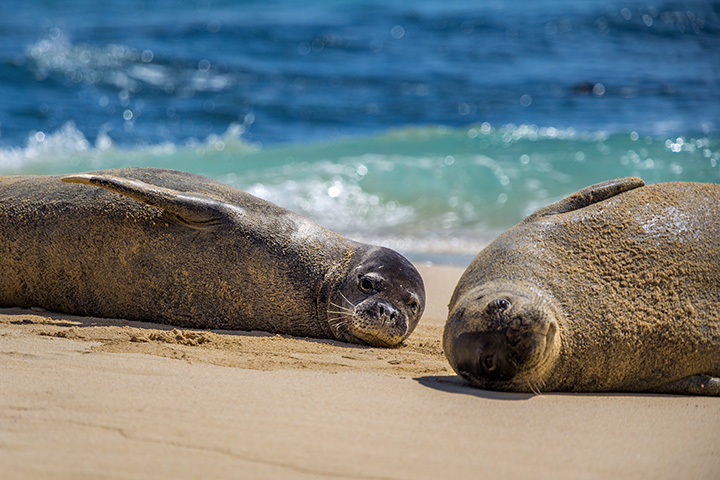
Photo by fnendzig
Overview
On October 21, 1972, the Marine Mammal Protection Act (MMPA) (P.L. 92-522) was signed into law, having passed both chambers of Congress with wide bipartisan support. The MMPA prohibits “taking” any marine mammal without a permit and defined “take” as harassing, hunting, capturing, or killing, or attempting to harass, hunt, capture, or kill. The law bans the importation of any part or product of a nursing marine mammal and their mother, and it sets the goal of a zero mortality or serious injury rate for dolphins caught incidental to tuna purse seining.
Take Action: Stop Congress from Gutting the Marine Mammal Protection ActLead Up to the MMPA
Throughout history, humans saw marine mammals as food, as sources for fur or other survival resources, or as pests. They were hunted and culled—or simply ignored—for thousands of years by coastal communities globally. In more recent centuries, while some species were a target for sport, others were sought for their meat and blubber (turned into oil) and used for raw materials in the early industrial era (baleen plates from the great whales were used in many of the same applications that plastic is used for today). By the late nineteenth and early twentieth centuries, technological developments strengthened the efficacy of these hunting expeditions, allowing exploitation on the open sea and in polar regions, to the extent that several great whale and pinniped (seal and sea lion) species were facing extinction. Steller’s sea cow in Alaska, a species of dugong, had already been rendered extinct in less than 30 years of hunting by Europeans in the eighteenth century. As industries such as commercial fishing and whaling faced rapidly declining populations, the public became aware of the devastating impact these industries had on marine mammals.
In the 1970s, concern for the great whales spread across the United States, sparking an anti-whaling movement. Activists took to the streets in protests, and scientists found innovative ways to shift public attitudes. Perhaps most famously, cetologist Roger Payne published recordings of humpback whales, who compose and sing unique songs every mating season. Such measures triggered awareness and concern for these mammals; nevertheless, this concern only scraped the surface of how many species needed protection. Simultaneously, the public was voicing concern about marine mammal bycatch in industrial fishing. Much of this concern was focused on the eastern tropical Pacific, where purse seine nets used to catch tuna were killing thousands of dolphins. On land, marine mammal species such as walruses, seals, and polar bears were not spared from human exploitation, and faced declines as well.
All of these issues came to a head in 1972, when the US Congress passed the Marine Mammal Protection Act.
History of the MMPA (1972–2010)
The MMPA was amended, authorizing conditions that grant permits to US fishers not targeting tuna, to take marine mammals “incidentally” in commercial fisheries. These conditions are that (1) the population is not depleted, (2) the total of such taking has a negligible impact on the stock, and (3) a system is established for monitoring such taking. Additionally, the amendments outlined other requirements and procedures to transfer marine mammal management authority to the states and redefined the terms “depletion” and “depleted.”
The MMPA was amended, requiring the secretary of commerce to obtain documentation from foreign nations wishing to import yellowfin tuna into the United States. Requirements for these fisheries include (1) establishing a regulatory program for governing the incidental taking of marine mammals that is comparable to the US program and (2) maintaining an average rate of incidental taking that is also comparable to the US program. The amendment requires the secretary to carry out a program of research on marine mammal populations to monitor the effect yellowfin tuna fishing was having on them.
In the late 1980s, the Kokechik Fishermen’s Association challenged, in the US District Court for the District of Columbia, the National Marine Fisheries Service’s (NMFS) issuance of a general permit to the Federation of Japan Salmon Fisheries Cooperative Association to capture Dall’s porpoises during commercial fishing operations in US waters. NMFS stated that it could not determine whether other marine mammals that would be affected, such as northern fur seals, were at sustainable population levels (although one of the stocks had recently been designated as depleted) and thus only issued the permit for take of Dall’s porpoises. Opponents argued that NMFS could not issue the permit, as additional depleted populations of marine mammals would inevitably be affected. The final decision invalidated the permit and barred the Japanese fleet from fishing within US waters. Furthermore, the court concluded that many of the existing general permits and small take exemptions could not be reissued, and some new authorizations could not be issued. These concerns lead to Congress amending the MMPA.
The 1988 amendments to the MMPA included the following:
- An interim exemption (five years) for commercial fishing operations (other than commercial yellowfin tuna fishing) from specified provisions of the MMPA governing the incidental taking of marine mammals. This exemption included interactions between 38 different fisheries and 40 species of marine mammals, except those in the eastern tropical Pacific yellowfin tuna purse seine fishery and those involving California sea otters.
- A requirement for vessels in exempted fisheries to gather information regarding incidental takings of marine mammals and to acquire data on marine mammal commercial fisheries interactions.
- A directive for the secretary of commerce to compile and publish lists of fisheries in three categories based on frequency of incidental taking of marine mammals by vessels in those fisheries.
- A prohibition on such exemptions authorizing the intentional lethal take of any Steller sea lion, cetacean, or marine mammal from a population stock designated as depleted.
- An authorization for the secretary to issue permits for the (1) importation of a marine mammal for the protection or welfare of that animal and (2) taking or importation of a marine mammal for scientific research, for public display, or to enhance the survival or recovery of a species or stock, under certain conditions.
- A requirement for foreign fleets to lower the number of dolphins killed in tuna fisheries to an average incidental take rate comparable to that of the United States.
- An extension of the permit system to encompass foreign fisheries seeking to export tuna products to the United States.
The International Dolphin Conservation Act, which amends the MMPA, was signed into law. This allows the United States to enter into international agreements spanning at least five years that prohibit harvesting tuna using purse seine nets deployed on or encircling dolphins or other marine mammals to catch the tuna that swim beneath them.
In 1991, NMFS established the Working Group on Marine Mammal Unusual Mortality Events in response to large numbers of marine mammal mortalities in the late 1980s. Under the MMPA, an unusual mortality event is defined as “a stranding that is unexpected, involves a significant die-off of any marine mammal population, and demands immediate response.”
The working group was formalized when Congress passed the Marine Mammal Health and Stranding Response Act in 1992 as an amendment to the MMPA. The Marine Mammal Health and Stranding Response Act established the Marine Mammal Health and Stranding Response Program. The purpose of this program is to (1) facilitate the collection and dissemination of reference data on the health of marine mammals and health trends in marine mammal populations in the wild, (2) correlate the health of marine mammals and marine mammal populations in the wild with available data on physical, chemical, and biological environmental parameters, and (3) coordinate effective responses to unusual mortality events.
The MMPA was reauthorized. The provision governing fisheries interactions with marine mammals (Section 118, known as the “fish fix”) was the principle amendment and was negotiated under a two-year facilitated process with nongovernmental organizations (including AWI) and the fisheries sector. Other positive amendments included a stronger harassment definition; however, a major negative change was the last-minute gutting of the MMPA’s protections for captive marine mammals.
Prior to 1994, the US Departments of Commerce and Agriculture, (enforcing the MMPA and the Animal Welfare Act of 1966 respectively) shared equal oversight of captive marine mammals. After intensive pressure from the captive display industry, the 1994 amendments shifted the majority of the jurisdiction for captive marine mammals to the USDA (which had minimal marine mammal expertise within its ranks of inspectors and administrators). The Department of Commerce, with its extensive marine mammal expertise within NMFS, was largely removed from its oversight position, retaining authority only over some record-keeping requirements (including those related to education programs) and authority over imports and captures from the wild. Essentially, after 1994, once a marine mammal entered a captive display facility in the United States, the Department of Commerce no longer had any authority to set maintenance or care conditions in cooperation with the USDA.
That year was the last full reauthorization of the Marine Mammal Protection Act to date.
Other 1994 amendments included the following:
- The establishment of take reduction plans to reduce incidental mortality or serious injury of marine mammals below the potential biological removal levels and the establishment of methods for reducing incidental mortality or serious injury to insignificant levels approaching zero within five years.
- The establishment of take reduction teams to facilitate the development of such plans.
- The authorization of the secretary of commerce to enter into cooperative agreements with Alaska Native organizations to conserve marine mammals and provide co-management of their subsistence use by Alaska Natives.
- A provision (Section 120) to allow a state to apply to the secretary of commerce for the intentional lethal taking of individually identifiable pinnipeds that were having a significant negative impact on certain salmonid stocks. The secretary was authorized to establish a Pinniped-Fishery Interaction Task Force to advise on responding to such applications.
- A provision to allow the importation of sport-hunted polar bear trophies from Canada.
Congress amended the MMPA through language included in the National Defense Authorization Act for fiscal year 2004. This amendment weakened the definition of “harassment” for military readiness activities, such as the use of sonar technology, as well as for scientific research by the federal government. The 1994 definition of harassment in the MMPA was very conservative, including “any activity that has the potential to injure a marine mammal or marine mammal stock in the wild” or “any activity that has the potential to disturb a marine mammal or marine mammal stock in the wild by causing disruption of behavioral patterns, including, but not limited to, migration, breathing, nursing, breeding, feeding, or sheltering.”
The amended definition of harassment for military readiness activities and federal scientific research is less restrictive, including “any act that injures or has the significant potential to injure a marine mammal or marine mammal stock in the wild” or “any act that disturbs or is likely to disturb a marine mammal or marine mammal stock in the wild by causing disruption of natural behavioral patterns, including, but not limited to, migration, surfacing, nursing, breeding, feeding, or sheltering, to a point where such behavioral patterns are abandoned or significantly altered” (emphases added).
This amendment also gave the secretary of defense, after conferring with the secretary of commerce or the interior (or both), the ability to exempt any action or category of actions undertaken by the Department of Defense or its components from compliance with any requirement of the MMPA if it is determined that the exemption is necessary for national defense. The time limit on such an exemption is set at two years.
The process of amending the MMPA through the National Defense Authorization Act was met with jurisdictional concerns from both Democrats and Republicans.
On April 28, in reaction to a trainer being killed by a captive orca at SeaWorld Orlando, the US House of Representatives Natural Resources Committee, Subcommittee on Fisheries, Wildlife and Oceans, led by Subcommittee Chair Madeline Bordallo (D-GU), held an oversight hearing on the remaining provisions of the MMPA that address captive marine mammals, primarily the requirement for display facilities to have education programs (see CSPAN archive).
Attacks Under the Trump Administration
In 2017, the administration cancelled a 2015 rule that aimed to help reduce the risk of endangered whales and sea turtles being caught in fishing nets along the US Pacific Coast. Upon further analysis, NOAA sided with the administration and released a statement declaring the rule was no longer necessary, as existing protections had proven effective by reducing the number of marine mammals entangled in gillnets.
In 2018, five oil and gas companies were approved to use seismic blasts to search for potential oil and gas reserves off the Atlantic coast. Prior to this, these plans had been rejected by the US Department of the Interior’s Bureau of Ocean Energy Management over concerns for marine wildlife. Due to litigation and permit expiration, the five companies never moved forward with these seismic explorations.
The Endangered Salmon Predation Prevention Act was also signed into law in 2018. It amended the MMPA to authorize NOAA to issue permits allowing Washington, Oregon, Idaho, the Nez Perce Tribe, the Confederated Tribes of the Umatilla Indian Reservation, the Confederated Tribes of the Warm Springs Reservation of Oregon, and the Confederated Tribes and Bands of the Yakima Nation to kill California sea lions in the Columbia River basin to protect certain fish stocks from sea lion predation. Specifically, the permits can be issued to protect (1) endangered or threatened species of salmon, steelhead, or eulachon and (2) species of lamprey or sturgeon that have been listed as species of concern. This was an extraordinary expansion of Section 120, which had been established under the 1994 amendments.
AWI was one of the only groups to speak out against the disturbing precedent this bill sets, by both undermining the fundamentally protective nature of the MMPA and perpetuating the false notion that killing sea lions would save the endangered salmon of the Pacific Northwest.
Learn more about AWI’s work to protect marine wildlife.
Take Action for Marine Wildlife

Stop Congress from Gutting the Marine Mammal Protection Act
For over 50 years, the Marine Mammal Protection Act (MMPA) has safeguarded marine mammals from harm, preventing population declines and accelerating their recovery. By aiming to ensure that these animals remain at sustainable levels and continue to play vital roles in their ecosystems, the MMPA has been instrumental in marine conservation. Yet, despite its successes and long-standing bipartisan support, the law faces the most serious threat in its long history—draft legislation that, if enacted, would gut its core protections at a time when marine mammals need them most. Please write your members of Congress and urge them to defend this bedrock law and the remarkable species it protects.
Captive Marine Mammals
Recent News and Articles