Animals in Labs Laws, Regulations, and Guidelines
Existing Policy
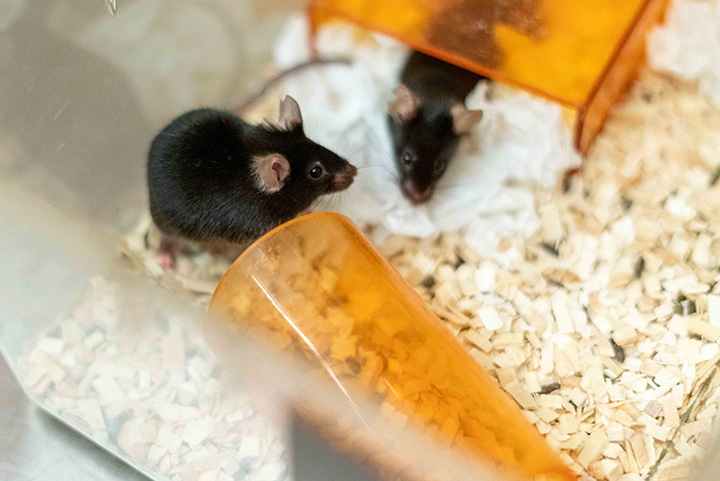
Photo by Stocksteady/Wirestock Creators
Overview
A range of laws, regulations, and guidance documents govern the use of animals in research and aim to improve their care and welfare. In the United States, federal laws such as the Animal Welfare Act and the Health Research Extension Act establish standards and oversight mechanisms, though gaps in coverage and enforcement remain. Internationally, laws and directives provide varying levels of protection for animals used in scientific research. Complementing these frameworks, supporting resources and guidelines promote best practices, transparency, and the development of alternatives to animal use. Together, these efforts advance animal welfare while highlighting areas where further progress is needed.
Domestic
Animal Welfare Act
The Animal Welfare Act (AWA)[1] is a federal law that regulates the treatment of animals in research, teaching, testing, exhibition, transport, and by dealers. The law establishes minimum standards of care that must be provided for animals with respect to, among other things, housing, handling, sanitation, food, water, veterinary care, and protection from weather extremes. Specific standards are set forth in the AWA’s implementing regulations.[2]
Enacted in 1966, the AWA was the first federal law regulating animals in research. It has been amended several times since, most notably in 1985 via the Improved Standards for Laboratory Animals Act. (For more on the legislative and regulatory history of the AWA, see AWI’s Animal Welfare Act legislative page.)
In its current form, the AWA covers warm-blooded species such as nonhuman primates, dogs, cats, rabbits, hamsters, and guinea pigs. Three types of warm-blooded animals, however, are expressly excluded from AWA coverage if they are bred specifically for use in research: rats of the genus Rattus, mice of the genus Mus, and birds. These excluded species—particularly rats and mice—make up the vast majority of animals actually used in research. Coverage is also denied to all cold-blooded species, including fish, amphibians, reptiles, and invertebrates (e.g., octopuses and other cephalopods, crustaceans, and insects).
The AWA is enforced by the Animal Care program of the US Department of Agriculture’s Animal and Plant Health Inspection Service (APHIS). APHIS has published Animal Welfare Act and Animal Welfare Regulations (aka the Blue Book), which consolidates the statute and its implementing regulations into a single volume, to be used—as stated in the Blue Book—“as a tool to improve compliance among our licensees and registrants and to enhance the consistency of inspections by our field inspectors.”
With respect to animals used in research, testing, or teaching, the AWA regulations stipulate that facilities using species protected under the law must, among other things, (1) be registered with the USDA, (2) maintain an Institutional Animal Care and Use Committee (IACUC) that serves as an internal oversight body, and (3) submit to unannounced USDA inspections at least once a year. Inspection reports are posted online. In addition, facilities must provide yearly reports that detail the number of AWA-covered animals experimented upon or held but not used in research that year, including information on pain experienced by the animals, whether it was relieved, and—if not—the justification for withholding pain relief.
When noncompliances with the AWA are found, the USDA can take a number of enforcement actions, such as issuing a warning letter, filing an administrative complaint, or issuing a stipulated penalty confiscating animals who are experiencing unrelieved suffering. Unfortunately, the USDA has a history of lax enforcement and inconsequential fines.
The Health Research Extension Act
The Health Research Extension Act of 1985 (HREA)[3] is a federal law that authorizes the Department of Health and Human Services to establish rules for the proper care and treatment of animals used in research by certain federally funded institutions and for the constitution and operation of IACUCs. These rules are set forth in the Public Health Service Policy on Humane Care and Use of Laboratory Animals (PHS Policy). The PHS Policy covers all vertebrates, including rats, mice, birds, fish, reptiles, and amphibians. Invertebrates—including cephalopods, insects, and crustaceans—are not covered. However, the PHS Policy only applies to research institutions that receive funding from PHS agencies, such as the National Institutes of Health, the Food and Drug Administration, and the Centers for Disease Control and Prevention.
Institutions that receive PHS funding must appoint an IACUC and have an “Assurance” approved by the NIH’s Office of Laboratory Animal Welfare (OLAW). The Assurance must include the names of IACUC members and describe an animal care and use program that meets or exceed standards set by PHS policy. The institution must commit to meeting the minimum standards set forth in the Guide for the Care and Use of Laboratory Animals (see below).
However, there is no legal oversight to ensure adherence to these standards (i.e., no unannounced compliance inspections by an oversight body). Instead, the IACUC is required to conduct semi-annual announced inspections, and report any serious noncompliance with PHS Policy or deviation from the standards in the Guide to OLAW. OLAW has no way to know if deviations are not reported, short of whistleblower reports. Moreover, when deviations are reported, OLAW’s standard response is merely to ask the institution for a plan to ensure the deviation will not happen again. OLAW can suspend an institution’s funding in instances of noncompliance but rarely does so. (For a case study illustrating OLAW’s response to repeated, serious violations of PHS Policy and the Guide, see OLAW Oversight Fails to Protect Mice in Research.)
Guide for the Care and Use of Laboratory Animals
The Guide for the Care and Use of Laboratory Animals (the Guide) does not have the force of law, but it is often used as a de facto regulatory document: PHS policy requires researchers at institutions funded by PHS agencies to comply with the Guide, and AAALAC International (a private accrediting organization) also relies on the Guide to set standards for its accredited institutions. However, the Guide is written in general terms, and only statements preceded by the word must indicate actions that are considered mandatory as a matter of Guide compliance. Statements preceded by the word should indicate strongly recommended actions for which alternative actions are acceptable, with justification. The current edition of the Guide features the word must 43 times and the word should 656 times in the main text. Therefore, as its name implies, this document is intended to provide guidance rather than mandates.
The Guide was first published in 1963, predating both the AWA and its regulations and the PHS policy. It has been revised several times and is now in its eighth edition, published in 2011. The Guide covers all vertebrates (warm- and cold-blooded) and contains more detailed housing, husbandry, training, veterinary care, and facility standards than the AWA regulations. Also, whereas the AWA regulations and PHS Policy were written by government officials, the Guide is informed by scientific data and the values and judgements of individuals who are invited to contribute to each edition. Because it is largely written by scientists rather than an enforcement body, however, many of its recommendations are difficult to enforce compared to the AWA regulations.
AWA Regulations vs. PHS Policy
| AWA Regulations (AWA) | PHS Policy (HREA) | |
|---|---|---|
| Oversight body | USDA (APHIS) | NIH (OLAW) |
| Covers nonhuman primates, cats, dogs, pigs, rabbits, and a few other mammals used in research, teaching, and testing | ✓ | ✓ |
| Covers mice, rats, birds, fish, reptiles, and amphibians used in research, teaching, and testing | X | ✓ |
| Requires annual unannounced inspections by third-party inspectors | ✓ | X |
| Requires IACUC to conduct semi-annual, announced facility inspections | ✓ | ✓ |
| Applicability is independent from funding source | ✓ | X |
| Requires annual report of usage statistics for covered species, including pain caused and whether pain was relieved | ✓ | X |
| Legal action can be taken for noncompliance | ✓ | X |
The AWA regulations are strong, but need to be expanded to cover more species, particularly rats, mice, and fish. The PHS policy covers more animals but has weaker protections and no independent oversight. Institutions may be covered by the AWA regulations, the PHS policy, both, or neither, depending on the species involved and the institution’s funding sources.
International
- European Convention for the Protection of Vertebrate Animals used for Experimental and other Scientific Purposes (ETS No. 123)
- EU Directive 2010/63/EU on the Protection of Animals Used for Scientific Purposes
- Commission Recommendation 2007/526/EC – Guidelines for Accommodation and Care of Animals Used for Experimental & Other Scientific Purposes
- Canada’s Guidelines for the Ethical Use and Care of Animals in Science
- United Kingdom’s Animals (Scientific Procedures) Act of 1986
- Swiss Animal Welfare Act
- German Animal Welfare Act
- Australian Code for the Care and Use of Animals for Scientific Purposes
- New Zealand Animal Welfare Act of 1999
Additional resources on international animal welfare laws:
- Michigan State University’s Animal Legal & Historical Center
- Global Animal Law Association’s Legislation Database
- Georgetown University’s Animal Law Guide
Improving Animal Welfare
Animal Welfare Information Center
The Animal Welfare Information Center (AWIC) was established pursuant to the 1985 amendments to the AWA, which mandated the establishment of an information service at the National Agriculture Library. The service was tasked with providing information on employee training, prevention of unintended duplication of animal experimentation, and improved methods of animal experimentation to replace and reduce animal use and minimize pain and distress to animals.
Today, AWIC provides information, products, and services related to the improved care and use of animals in research, testing, and teaching as described in the AWA.
Supporting Materials: Animal Welfare Information Center
AWIC provides guidance on building and conducting a 3Rs literature search. In addition to providing instructions for finding 3Rs resources, researchers can request a free literature search. Researchers simply need to fill out a request form, email it along with their animal use protocol, and results are returned within 10 to 15 business days.
The AWA Quick Reference Guides provide a condensed source of information for common topics in the AWA. Information on these topics is spread throughout the AWA regulations (9 CFR), so the guides provide this information in one place, along with citations and section numbers where the information is found. The topics include (1) responsibilities and functions of the IACUC, the attending veterinarian, the institutional official, and the principal investigators; (2) requirements for environmental enhancement for nonhuman primates and exercise for dogs; (3) regulation of field research; (4) recordkeeping for research facilities and dealers and exhibitors; and (5) qualifications and training of personnel.
This comprehensive resource was last updated in October 2021. It provides science-based information on environmental enrichment, social housing, training, and abnormal behavior and stereotypes for great apes, macaques, baboons, callitrichids, and others. There is also a section listing relevant websites and online information. The document contains 1,012 citations for scientific literature published between 1999 and July 2021.
Supporting Materials: Additional Resources
The 1985 amendments to the AWA introduced laws on providing a physical environment adequate to promote the psychological well-being of nonhuman primates. The AWA regulations that set out standards for how this should be provided included requirements for social housing, environmental enrichment, and exercise (see 9 CFR Sec. 3.81). However, when Animal Care inspectors were surveyed five years after they started enforcing these performance-based standards, the consensus among them was that (1) there was a lack of clarity and specificity in the standards; (2) the standards were difficult to enforce; (3) facilities did not understand how to meet them; and (4) inspectors did not know how to judge compliance. To address these problems, APHIS published additional clarifications in the Final Report on Environmental Enhancement to Promote the Psychological Well-Being of Nonhuman Primates. This report was included in a Draft Policy on Environmental Enhancement for Nonhuman Primates that was issued for public comment in July 1999, but was ultimately not implemented. However, it still provided science-based information that gave facilities better guidance on specific aspects to include in their environmental enhancement plan, such as social grouping, social needs of infants, structure and substrate, foraging opportunities, and manipulanda. (In 2023, APHIS requested public comments on a proposal to establish standards addressing environmental enrichment for all regulated animals—not just nonhuman primates. A decision on this proposal is still pending.)
The 1959 The Principles of Humane Experimental Techniques by William Russell and Rex Burch coined the use of the 3Rs—replacement, reduction, and refinement—to guide ethical use of animals in research and minimize pain and suffering of laboratory animals.
The ARRIVE guidelines are a checklist of items researchers are encouraged to report in their methodology when writing up research articles. These recommendations promote full and transparent reporting, aimed at maximizing the quality and reproducibility of published research involving animals. They are broken down into the “ARRIVE Essential 10,” which lists the bare minimum information that must be provided for readers and reviewers to assess the reliability of the findings, and the “Recommended Set,” which lists items needed to provide important context for the study. Over 1,000 journals have endorsed the ARRIVE guidelines.
In order to encourage application of the 3Rs and increase the reproducibility of research and animal testing, a group of scientists has developed the PREPARE guidelines to help researchers effectively plan their experiments. They cover three broad categories that determine the quality of preparation for the study: formulation of the study (e.g., literature searches, harm-benefit analysis, experimental design and statistical analysis); dialogue between scientists and the animal facility (e.g., timescale and funding, facility evaluation, education and training); and quality control of the components of the study (e.g., health monitoring, housing and husbandry, experimental procedures, fate of the animals at the end of the study).
A free resource from the United Kingdom’s National Centre for the 3Rs (NC3Rs), the EDA helps researchers diagram an experimental plan in order to design a robust experiment leading to reliable and reproducible results. The EDA recommends statistical analysis methods, provides support for randomization and blinding, and performs sample size calculations.
Citations
- Chapter 54—Transportation, Sale, and Handling of Certain Animals. Office of the Law Revision Counsel United States Code.
- AWA’s Implementing Regulations. Electronic Code of Federal Regulations (eCFR).
- Health Research Extension Act of 1985. US Government Publishing Office.
Strengthening Laws, Regulations, and Enforcement
Recent News and Articles