Volume: 70 Issue: 1
Primate Research Center Could Evolve into Sanctuary
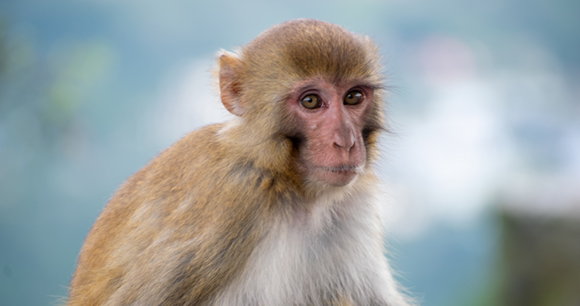
The Oregon National Primate Research Center (ONPRC) at Oregon Health & Science University (OHSU)—the largest of the seven National Primate Research Centers and one with a notoriously poor welfare record—may cease biomedical research and be transformed into a nonhuman primate sanctuary.
Last year, amid criticism from animal advocates, state legislators, and the public, OHSU was directed by the Oregon legislature to estimate the costs of potential options for future uses of the ONPRC. The university’s subsequent report indicated that maintaining current operations would be the cheapest option ($50–70 million), compared to closing the facility ($241 million) or converting it to a sanctuary ($220–291 million).
Nonetheless, in an unprecedented move, the National Institutes of Health approached OHSU in February “to explore whether federal support could be available to transition the [ONPRC] to a primate sanctuary.” The following week, OHSU’s board passed a resolution authorizing a 180-day negotiation period with the NIH over a potential agreement.
It remains to be seen whether an agreement will materialize. Those who oppose converting the center argue that alternatives are not available to replace the research conducted at NPRCs. The sheer number of monkeys at the ONPRC is also an issue: The nation’s largest sanctuaries currently hold no more than a few hundred primates each, while the ONPRC holds nearly 5,000. Former ONPRC director Nancy Haigwood, a proponent of continued research at the center, told the journal Science that she believes OHSU is grossly underestimating the cost of closing the ONPRC or transforming it into a sanctuary, and that either move would likely require OHSU to transfer a large number of monkeys elsewhere—to zoos, other sanctuaries, or research facilities. The situation highlights the need to increase the nation’s certified sanctuary space for monkeys as the government continues to look toward reducing their use in laboratories.
See more AWI Quarterly articles about: Animals in Laboratories
See more AWI Quarterly articles of type: Quick Read