Farm Bill Passes House in a Missed Opportunity to Help Animals
April 30, 2026 in Animals in Laboratories, Companion Animals, Equines, Farmed Animals
Washington, DC—Today, the House of Representatives voted 224-200 to pass the Farm Bill—the Farm, Food, and National Security Act of 2026 (H.R. 7567). In addition to continuing to utilize taxpayer dollars to buoy America’s broken, cruel, and dangerous system of animal agriculture, the bill undermines animal welfare in serious ways.
“The House Farm Bill is a missed opportunity to address the deep and systemic problems embedded in industrial animal agriculture,” said Susan Millward, executive director and CEO of the Animal Welfare Institute. “Despite significant public concern about animal welfare and global health, this legislation fails to make any meaningful reforms to the status quo. Instead, it props up intensive confinement operations and sidelines higher-welfare practices, preserving an industry in need of urgent change rather than taking meaningful steps forward.”
The Farm Bill is a massive legislative package that serves as a key driver of food and agriculture policy in the United States and touches on multiple other policy areas affecting animal welfare. Though scheduled for reauthorization every five years, a complete Farm Bill has not passed Congress since 2018.
The animals impacted by H.R. 7567 include:
Farmed Animals
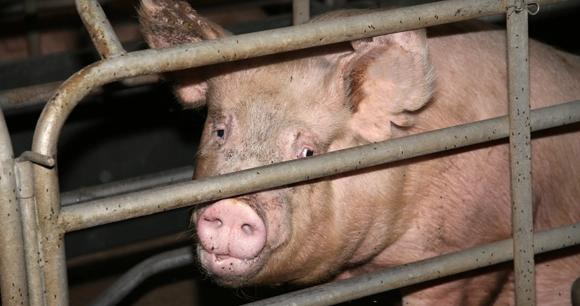
Disappointingly, this Farm Bill maintains “business as usual” for a factory farming system that subjects billions of animals to intensive confinement and slaughter every year, allowing the continued flow of subsidies that benefit the meat, dairy, and egg industries. Factory farms treat sentient animals as commodities, prioritizing profit over welfare, including by packing chickens, pigs, cows, and other animals together by the thousands. These farms also expose the public to serious health risks through the transmission of dangerous new diseases and the development of antibiotic resistance.
One of the most troubling provisions in the Farm Bill is the inclusion of the Save Our Bacon Act (H.R. 4673). This provision seeks to nullify California’s Proposition 12 and other state-level measures that improve the treatment of farmed animals by requiring more humane housing, banning extreme confinement, and prohibiting the sale of products from animals raised in conditions that don’t meet the new standards.
Another provision in the Farm Bill would allow increased sales of uninspected meat. Based on language in the contentious Processing Revival and Intrastate Meat Exemption (PRIME) Act (H.R. 4700), the bill seeks to permit meat sales from custom slaughterhouses to consumers. At custom slaughter facilities, cattle, pigs, sheep, and goats are slaughtered for anyone who wants meat for themselves, their household, or nonpaying guests. They are not subject to continuous federal or state inspection and, according to AWI’s 2023 review of USDA documents pertaining to custom slaughter, are among some of the worst violators of humane handling requirements.
The Farm Bill would also allow the mink farming industry to receive taxpayer dollars for developing and expanding into international markets, even though mink on fur farms incubate dangerous diseases such as COVID-19 and avian influenza, creating the perfect conditions for new variants to jump to humans. It is a poor use of federal dollars to subsidize an industry that American consumers have overwhelmingly rejected, and one that scientists confirm poses a severe risk to public health.
Equines
Moreover, the Farm Bill fails to include a prohibition on the slaughter of American horses for human consumption, despite overwhelming public support for ending this gruesome and inhumane practice. A group of 13 Republicans and seven Democrats, led by Congressman Vern Buchanan (R-FL), filed an amendment to include the Save America’s Forgotten Equines (SAFE) Act (H.R. 1661/S. 775) in the Farm Bill—to no avail. The SAFE Act, which currently has 229 bipartisan cosponsors in the House, directly builds upon the prohibition on dog and cat slaughter that passed in the last Farm Bill by extending those protections to equines. Throughout the 119th Congress, numerous lawmakers on both sides of the aisle have requested that Committee Chairman Thompson incorporate provisions of the SAFE Act into the Farm Bill.
Companion Animals and Animals in Laboratories
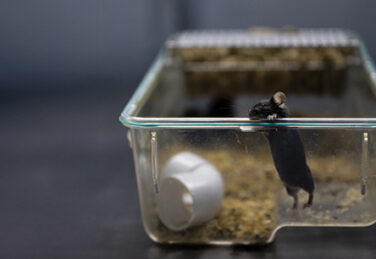
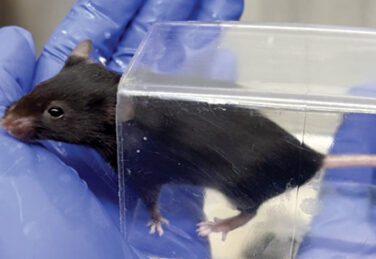
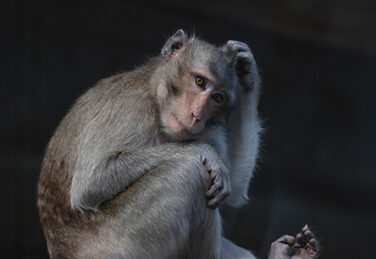
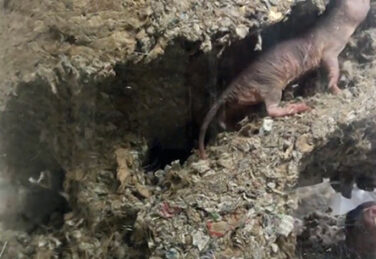
On a positive note, the bill reauthorizes the Protecting Animals with Shelter (PAWS) grant program until 2031. This program helps service providers expand their capacity to assist domestic violence survivors who have companion animals. The House also adopted amendments requiring federal research facilities to provide for the adoption or non-laboratory placement of animals no longer needed for research and to prohibit certain painful experiments on dogs and cats.
The Senate will take up the Farm Bill next, either by considering the version passed today or by releasing its own version, which would later need to be reconciled with the House bill. AWI is committed to working with members of Congress to improve the bill’s outcomes for all animals.
Media Contact Information
Kim Meneo, Animal Welfare Institute
kim@awionline.org, (202) 446-2116
About AWI
The Animal Welfare Institute (awionline.org) is a nonprofit charitable organization founded in 1951 and dedicated to alleviating animal suffering caused by people. We seek to improve the welfare of animals everywhere: in agriculture, in commerce, in our homes and communities, in research, and in the wild. Follow us on Facebook, Instagram, Threads, Bluesky, and LinkedIn for updates and other important animal protection news.
Latest AWI Quarterly Articles
See All Animals in Laboratories AWI Quarterly Articles