Volume: 75 Issue: 1
CITES CoP20 Concludes with Conservation Successes
Hundreds of wild species gained important protections at the 20th meeting of the Conference of the Parties to the Convention on International Trade in Endangered Species of Wild Fauna and Flora (CITES CoP20), held in Samarkand, Uzbekistan, in late 2025. After more than a fortnight of debate among more than 3,200 delegates representing over 160 countries that are parties to the convention and nearly the same number of nonparty nongovernmental organizations (including AWI), the evidence justifying greater species protections prevailed. The integrity of the convention was also maintained in the face of concerted efforts to weaken its provisions.
CITES is the primary global agreement designed to prevent animal and plant species targeted in international trade from becoming imperiled due to trade. Unlike many conventions that require consensus to reach decisions, CITES incorporates a voting procedure that allows difficult decisions to be made when consensus cannot be achieved, and it has enforcement mechanisms to compel party compliance.
Animals and plants impacted by international trade, whether extracted from the wild or bred in captivity, can be listed in one of three appendices that provide different levels of protection. Appendix I is the most restrictive, largely prohibiting trade in listed species for commercial purposes. Trade in species listed in Appendix II is allowed, but exporting countries are required to make a determination that trade will not harm the species in the wild before issuing any export permits. CITES currently regulates trade in nearly 41,000 species, with over 1,000 species listed in Appendix I and over 39,000 species in Appendix II. Approximately 500 species are listed in Appendix III at the request of individual parties seeking assistance from other CITES member nations in collecting trade data and preventing unsustainable or illegal exploitation of the species.
To secure a species listing in Appendix I or II, reclassify a listed species (“uplist” it to Appendix I or “downlist” it to Appendix II), or delete a species from either appendix, a party must submit a proposal for consideration by the Conference of the Parties, which meets approximately every three years. Listing proposals are first deliberated and, if necessary, voted on in committee. (At each CoP, there is a Committee I that considers listing proposals to amend the appendices and other species-specific issues, while a Committee II reviews working documents pertaining to the interpretation and implementation of CITES.) Committee decisions are then either approved or reopened for debate during a plenary session at the end of the meeting. Proposals can be approved by the parties either by consensus or, failing that, through a vote by a two-thirds supermajority. For Appendix III, parties can unilaterally add species by informing the CITES Secretariat.
In advance of CoP20, there was concern that the insatiable desire by several countries and commercial interests to exploit wildlife for international trade would undermine efforts to secure or increase protection for a wide range of species. Also, though the United States has historically been a reliable advocate for measures to strengthen CITES and extend protections to qualifying species, many expected the Trump administration to effectuate a fundamental shift in US priorities. In the end, however, the United States largely continued to champion the treaty and conservation efforts—though there were a handful of notable exceptions, including advocacy for several proposals to reduce or remove protections for particular species and an attempt to dismantle the Sponsored Delegates Project, which facilitates meeting attendance by delegates from lower-income parties.
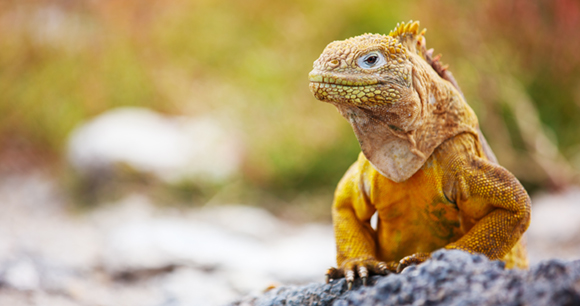
As in previous CoPs, considerable attention was given to proposals to either increase or decrease trade protections for charismatic megafauna such as elephants, rhinoceroses, big cats, and sharks. At this meeting, however, AWI focused on supporting listing proposals for less high-profile species that typically receive less attention, despite being threatened by the pet trade as well as by habitat loss and degradation, exacerbated by climate change. These included the Chilean rose-haired tarantula, Dorcas gazelle, two Ethiopian viper species (Bale Mountains adder and Ethiopian mountain adder), and Galapagos marine and land iguanas endemic to Ecuador. All were added to Appendix II by consensus, a significant achievement given the value of such species in trade.
Arachnids and Insects
The Chilean rose-haired tarantula is one of the most popular tarantula species in international trade, with over 9,500 imported into the United States alone from 2021 to 2024. Its road to listing at CoP20, however, was not a smooth one. Committee I rejected the original proposal by Bolivia, Argentina, and Panama, which included 14 “look-alike” species (CITES allows such species to be listed to aid enforcement efforts and prevent the serial depletion of similar-looking species). However, proponents of the listing were able to reopen the agenda item during the plenary session. The scope of the proposal was reduced to cover only the Chilean rose-haired tarantula, and the parties agreed by consensus to an Appendix II listing, to spirited applause.
Bolivia, Argentina, and Panama also joined AWI in co-hosting a side event at CoP20 about the international trade in tarantulas. At this event, Dr. Carol Fukushima, a leading expert on tarantulas, gave a compelling presentation about the trade, threats to tarantula populations, and the benefit of listing imperiled tarantula species under CITES.
Both arachnids and insects, given their enormous diversity and often striking colors and patterns, are in high demand for the pet trade and curio market. It is estimated that over 50 percent of all known tarantula species are in trade, involving hundreds of thousands of individual animals. The majority of arachnids and insects in international trade are captured from the wild and either sold alive as pets or dead as decorations—including beetles, butterflies, and spiders displayed in shadow boxes, entombed in resin cubes, or sold in bulk for do-it-yourself art projects.
Insects are nature’s pollinators, providing an estimated $57 billion in pollination services annually in the United States alone. They are an essential part of the food chain (with some species helping to control other insects that threaten crops, thereby reducing the need for chemical fertilizers). They also improve soil health and fertility (e.g., by consuming carrion, dead plants, and manure) and—in the case of ants and some other species—disperse seeds. Arachnids are bioindicators of healthy ecosystems. They cycle nutrients, serve as predators and prey, protect crops and human health by controlling certain insect populations, and create burrows and webs that provide microhabitats for other species.
Although CITES protects several tarantulas, scorpions, and other arachnids, as well as nearly 100 insect species, these ecologically critical yet declining animals are woefully underrepresented in the CITES appendices. AWI, allied organizations, and scientists are working to rectify this lack of representation, initiating a global effort to identify arachnids and insects in need of trade protection and secure listings for those species at future CoPs. Given the immense ecosystem services and economic value of both taxa, the importance of this initiative is clear.
Other Species
The newly Appendix II–listed Dorcas gazelle is the second smallest African gazelle species. Between 2020 and 2022, over 4,100 were traded internationally, including 3,900 live animals. Nearly 1,850 of those were captured in the wild from a population of less than 10,000. Demand for Dorcas gazelles as pets drives much of the trade, but they are also targeted for hunting trophies and parts, including horns, skulls, meat, and skins.
Several other mammal, bird, reptile, and amphibian species received increased protection from international trade at CoP20 as well. The Democratic Republic of the Congo secured an Appendix I listing for the okapi, a large ungulate in decline that is targeted for meat, skin, and oil. The golden-bellied mangabey—a primate under threat from the pet trade—was also uplisted from Appendix II to I.
After its Appendix I listing proposal for the striped hyena failed, Tajikistan nevertheless achieved an Appendix II listing with a zero commercial export quota for this species, which is in high demand in the exotic pet trade and for their body parts, which are used in traditional medicine, in superstition-based rituals, and for meat. The Hoffman’s two-toed sloth, threatened by the pet trade and for use as a prop in tourist photographs, was also added to Appendix II in response to a proposal by Brazil, Costa Rica, and Panama.
Thankfully, efforts to remove protections from charismatic megafauna species were largely unsuccessful. A proposal by multiple southern African countries to delete several giraffe populations from Appendix II failed to obtain the two-thirds supermajority of votes, with 49 percent of parties opposed. Namibia’s attempt to downlist its black rhinoceros population to Appendix II was rejected, and its efforts to reduce trade protections for Southern white rhinos and African elephants were rebuffed by a sizable majority of parties.
Some species did lose protections at CoP20, however: The bontebok, a large antelope endemic to South Africa and sport-hunted for trophies, was deleted from Appendix II, removing all international trade restrictions. Kazakhstan succeeded in reducing trade protections for saiga antelopes, who are killed primarily to acquire their horns for use in traditional medicine. And the parties approved a US-Mexico proposal to downlist the Guadeloupe fur seal to Appendix II.
Relatively few bird proposals were deliberated at CoP20, despite considerable evidence of a global decline in many avian species. AWI’s advocacy helped secure Appendix II listings—approved by consensus—for white-backed and Ruppell’s vultures. These species are threatened by ongoing population declines due to poisoning and threats from trade, including trade in live birds as well as their meat, feathers, brains, feet, and bones for human consumption, traditional medicines, and ritual animal sacrifice.
The parties approved Brazil’s proposal to add six seed finch species to Appendix II, primarily to protect them from the songbird trade. A group of Central African countries were able to secure Appendix II listings for seven species of forest-dwelling African hornbills, including black-casqued and white-thighed hornbills. These large birds with declining populations are killed for the large casques on their upper beaks (referred to as “hornbill ivory”), which are carved into luxury ornamental items or ground into traditional medicines. An attempt by the United States and Canada to downlist the peregrine falcon, which continues to be threatened by trade for use in falconry, was fortunately rejected.
Decisions made at CoP20 also resulted in critical protections for several amphibian and reptile species. A proposal by the European Union, Israel, and North Macedonia resulted in Appendix II listings of four species of frogs, including the Greek marsh and Epirus water frogs used in the frog leg trade. The Dominican Republic secured an Appendix I listing for the Hispaniolan giant galliwasp (a lizard), and several African countries succeeded in getting the Home’s hinge-back tortoise uplisted to Appendix I. Australia also obtained Appendix II protections for two endemic gecko species: the Mount Elliot leafed-tail gecko and the ringed thin-tailed gecko. Each of these species is exploited for the international pet trade, among other threats. Unfortunately, Bolivia and Mexico’s proposal for an Appendix II listing for over 60 species of rattlesnakes traded for skins and other parts was defeated.
Marine species also had a strong showing at CoP20. The parties voted to approve Appendix II listings for the tope shark, 16 gulper shark species, and 28 smoothhound shark species. They also approved Appendix I uplistings for the oceanic whitetip shark, the whale shark, and all mobulid rays, as the previous Appendix II listings for these species had not sufficiently curtailed population declines due to legal and illegal trade in their fins, meat, and other products. Each year, this trade claims the lives of an estimated 73 to 100 million sharks of various species.
The declining shark numbers, combined with CITES listings and prominent anti-finning campaigns, have reduced the availability of shark fins in Asia and other key markets. Demand, however, is shifting to fish maws (swim bladders, which the fish use for buoyancy control) as an alternative ingredient in luxury foods, cosmetics, and medicine—or simply as an investment. Consequently, the fish maw trade is growing exponentially and targeting dozens of species—primarily the larger species of croaker with the biggest maws. With virtually no national or international regulation of this trade, there is increasing evidence of dire consequences for both targeted fish and nontargeted animals bycaught by maw fisheries. These include species of small cetaceans, sharks, rays, and marine turtles—most of which are listed under CITES.
AWI is very familiar with the maw trade, given our ongoing efforts to combat the illegal fishing of totoaba—a large croaker species endemic to Mexico’s Gulf of California—and the trafficking of totoaba maws to China. Totoaba fishing is the primary threat to critically endangered vaquita porpoises, who are bycaught in totoaba gillnets. The totoaba maw trade, however, is merely the tip of the iceberg; without urgent international intervention, the looming extinction of the vaquita porpoise will be a mere prologue to the number of species jeopardized by the global maw trade.
To raise awareness of this threat, AWI and allies hosted a side event at CoP20. Attendees at this standing-room only gathering were introduced to the deadly consequences of the fish maw trade, and a global initiative was launched. This initiative—led by AWI in collaboration with an international suite of experts from civil society and academia—will examine all aspects of the burgeoning trade and seek global solutions, including CITES listings of targeted species at future CoPs and collaborative efforts in other forums to eliminate bycatch in maw fisheries.
Implementation and Enforcement
Committee II discussed more than 100 working documents that covered issues as diverse as zoonotic disease, a CITES gender action plan, wildlife crime enforcement, national ivory action plans, the transport of live specimens, curtailing trade in sharks and rays, and increasing parties’ capacity to implement CITES. Overall, debates over these issues, which are often contentious, did not undermine the convention or its provisions.
Several working documents proposed amendments to existing CITES resolutions and decisions or contained new resolution and decision text. CITES resolutions provide guidance to the parties on implementing the convention at a more granular level (regarding, for example, trade in pangolins, big cats, or timber species) or on making “findings” (including “non-detriment” and “legal acquisition” findings—ostensibly, determinations by the party that trade will not harm the species in the wild and that the specimen in trade was legally acquired) that are a prerequisite to allowing trade in a particular species. CITES decisions guide party implementation of the convention between CoPs, often directing the parties, the CITES Secretariat, or CITES committees (e.g., Animals, Plants, or Standing committees) to undertake specific tasks.
The role of wildlife trade in facilitating zoonotic disease transmission has received considerable attention in CITES and other international forums in the wake of the COVID-19 pandemic. At CoP20, a resolution was approved that recommended adoption of a “One Health” approach to address the impact of wildlife trade on human and animal health. The One Health concept recognizes that the health of people, animals, plants, and the ecosystem are deeply interconnected and interdependent. It promotes multidisciplinary, integrated, and collaborative efforts to identify and resolve potential disease outbreaks before they can adversely impact human or animal health.
Parties also approved decisions to improve CITES implementation and compliance by increasing capacity-building efforts, such as providing training in investigation and enforcement techniques and species identification. A decision was also approved to use CITES guidelines to reduce demand for trafficked wildlife by educating consumers about the legal, ethical, and environmental impacts of purchasing illegal wildlife products.
To fully achieve compliance with the convention, every party must have adequate national legislation implementing CITES. Remarkably, 66 parties, including some that joined five decades ago, continue to have inadequate national legislation. The CITES Secretariat typically addresses these issues through outreach and offers of assistance to the relevant parties. A more effective approach, however, would be to use the convention’s enforcement provisions to more rapidly compel compliance. At CoP20, minor amendments were adopted to avoid any weakening of these important processes.
The parties also provided guidance addressing concerns about legal and illegal trade in several CITES-listed species, including Asian big cats, African lions, cheetahs, terrestrial turtles and tortoises, marine turtles, songbirds, great apes, and marine ornamental fish. However, efforts to identify parties contributing to the illegal trade in pangolins—the most heavily trafficked land mammal on the planet—were deferred until the next Standing Committee meeting, in late 2026.
Despite the largely successful conservation outcomes from CoP20, the global biodiversity crisis is ongoing, with at least a million species threatened with extinction in the coming decades. Government inaction and corruption, corporate greed and indifference, and an ever-growing human population and its unrelenting demand for natural resources mean the crisis shows no signs of abating. While CITES cannot remedy all the myriad threats to biodiversity, it can safeguard species from the impacts of international trade, which significantly contribute to the decline of many species.
According to an analysis prepared for CoP20 by the International Union for Conservation of Nature (IUCN) and partner organizations, 1,718 of the animal species designated as Critically Endangered, Endangered, Vulnerable, or Near Threatened on the IUCN Red List of Threatened Species are likely threatened by trade. Around 870 of these are not listed on the CITES appendices. The specter of hundreds of species imperiled by trade yet unprotected under CITES is sobering. More sobering still: Given that the study was limited to species already assessed by the IUCN—a mere fraction of all known species—it likely covers only a small proportion of the actual number of species in need of protection under CITES.
In the ongoing effort to stem the biodiversity crisis, AWI will continue to work with our partner organizations in the Species Survival Network, other NGOs, the CITES Secretariat, and CITES parties to improve implementation and enforcement of the treaty, secure protections for qualifying species, and combat illegal and unsustainable trade. We are already preparing for CoP21, scheduled for 2028 in Panama, where we hope the parties will use all the tools available to them through CITES to build on the protections achieved at CoP20.
See more AWI Quarterly articles about: Endangered Species, Marine Wildlife, Terrestrial Wildlife
See more AWI Quarterly articles of type: Feature Article