USDA Wildlife Services
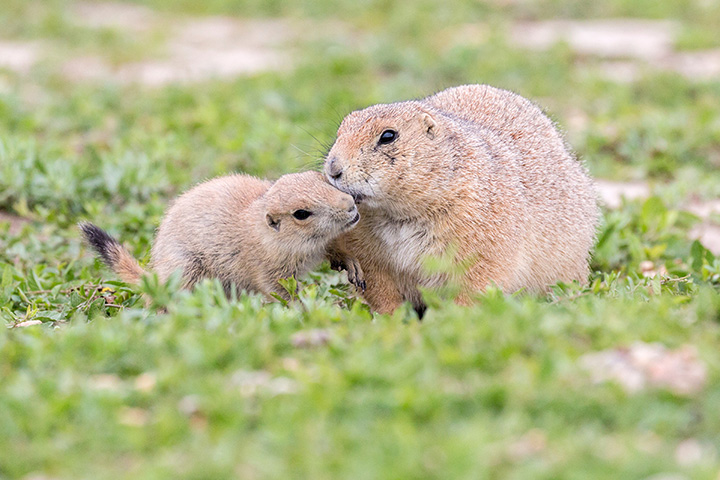
Photo by Patrick
Overview
A little-known US Department of Agriculture (USDA) program is using brutal methods and taxpayer dollars to indiscriminately kill wildlife across the United States. This program, ironically entitled Wildlife Services (WS), kills more than a million animals each year in the name of “managing problems caused by wildlife.” It operates with notoriously little transparency, refusing the public access to records documenting many of its killing activities. The program engages in myriad cruel practices, ranging from steel-jaw leghold trapping to poisoning and aerial shooting—at a substantial cost to taxpayers.
Take Action: Ask Your Representative to Support Reform of USDA’s Wildlife Services ProgramThe USDA Wildlife Services program:
Kills indiscriminately. WS has killed more than 50,000 nontarget animals representing over 150 species since 2000, including endangered species and family pets.[1] In addition, the intentional killing of targeted species often is not limited to those animals who have actually depredated livestock or game.
Uses inhumane traps. WS relies on steel-jaw leghold traps, which cause excruciating and prolonged pain to their victims. Leghold traps also endanger nontarget wildlife and domestic pets.
Wastes tax dollars. A vast number of the killings carried out by the program are not only brutal and unnecessary—they are also expensive. The program’s annual budget exceeds $100 million, about half of which is drawn from federal funds.[2] Perhaps more disturbing is the fact that a portion of the funding for WS is drawn from private sources who have far more leverage than taxpayers in dictating the priorities and activities of the program.
Harms the environment. WS indiscriminately kills native carnivores in a misguided attempt to protect game and livestock, ignoring detrimental environmental consequences. Eliminating carnivores can wreak havoc on ecosystems because small mammal density can surge, and these animals may carry disease and compete with game species for food.[3] Herbivore numbers may also grow unchecked, leading to overbrowsing and overgrazing.
Relies on ineffective methods. Coyotes respond to lethal control by compensatory reproduction; thus, killing merely leads to increased breeding, litter size, and pup survival.[4] Livestock predation may actually increase because there are more coyote pups to feed, thus perpetuating an endless cycle of government spending on “damage control” efforts with no measurable benefits.
Ignores humane, nonlethal management options. Although alternatives to WS’ inhumane and lethal predator control tools—including fladry, fencing, and light- and sound-generating devices, in addition to shed lambing and night penning practices—are available and have been shown to successfully deter depredation, WS primarily relies on cruel trapping and killing practices.
Threatens public safety. WS employs dangerous, nonselective poisons that can be lethal to humans. Sodium cyanide devices known as M-44s have poisoned nontarget wildlife, family dogs, and even humans,[5] while Compound 1080—a poison that causes prolonged suffering and death, and to which there is no antidote—is a known homeland security risk.[6] Take Action to Protect Wildlife, Pets, and Families from Deadly “Cyanide Bombs”.
Lacks accountability. WS has been widely condemned as lacking transparency and accountability in its practices and protocols. For example, investigations[7] have revealed a disturbing trend of “shoot, shovel and shut up” for nontarget animals—including threatened and endangered species—who are killed and not reported. In addition, because WS fails to verify all livestock losses and allows ranchers to self-report such losses, statistics produced by WS regarding livestock depredation are dubious at best and raise serious questions about the legitimacy of the program’s predator control activities.
The myriad problems plaguing WS underscore the need for substantial changes to program culture and procedure. The program’s ineffective, inhumane, and irresponsible practices threaten human health, animal welfare, and the environment. Ask your legislators to stop the use of taxpayer dollars to indiscriminately and cruelly kill wildlife, and demand transparency and accountability from WS.
Citations
- APHIS Wildlife Services. Program Data Reports for fiscal years 2000–2011.
- APHIS Wildlife Services. 2011 Program Data Report A: Fiscal Year 2011 Federal and Cooperative Funding.
- Henke, S.E. and F.C. Bryant. (2012). Effects of Coyote Removal on the Faunal Community in Western Texas. Journal of Wildlife Management 63(4):1066-1081.
- Knowlton, F.F. 1972. Preliminary interpretation of coyote population mechanics with some management implications. Journal of Wildlife Management 36: 369-382; Windberg, L.A. 1995. Demography of a high-density coyote population. Canadian Journal of Zoology 74: 942-954.
- Watson, K. and G. Hanscom (2000). Poison traps kill unintended victims. High Country News.
- Central Intelligence Agency. 2004. Comprehensive Report of the Special Advisor to the DCI on Iraq’s WMD; Federal Bureau of Investigation. 2001. FBI contacts for suspicious pesticide/organophosphate nerve gas incidents; Hickman, D.C. 1999. A Chemical and Biological Warfare Threat: USAF Water Systems at Risk. U.S. Air Force Counterproliferation Center, Maxwell Air Force Base, AL.
- Knudson, T. 2012. Suggestions in changing Wildlife Services range from new practices to outright bans. Sacramento Bee, May 6, p. 1A; Knudson, T. 2012. Wildlife Services’ deadly force opens Pandora’s box of environmental problems. Sacramento Bee, April 30, p. 1A; Knudson, T. 2012. The killing agency: Wildlife Services’ brutal methods leave a trail of animal death. Sacramento Bee, April 29, p. 1A.
Take Action for Terrestrial Wildlife
Ask Your Representative to Support Reform of USDA’s Wildlife Services Program
Please join AWI in our efforts to reform USDA’s Wildlife Services (WS) program. Ask your legislators to stop the use of taxpayer dollars to indiscriminately and cruelly kill wildlife, and demand transparency and accountability from Wildlife Services.
Wildlife Management
Recent News and Articles