Animals in Entertainment
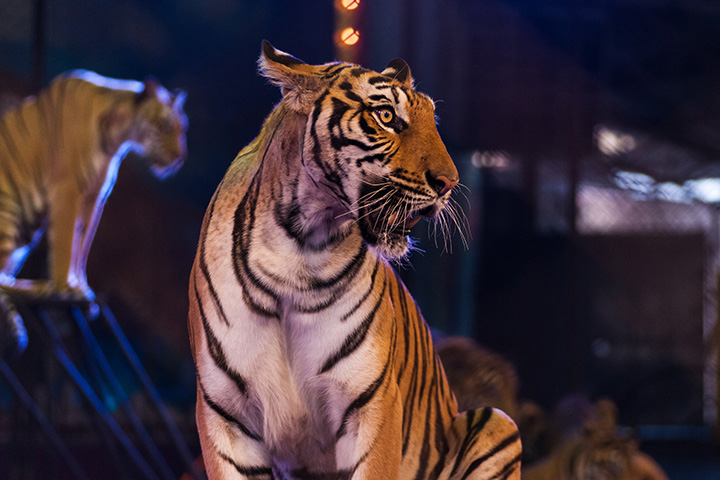
Photo by foras05
Overview
Perhaps the most abusive trade in wild animals is that which serves no other purpose than human entertainment. Countless wild animals are removed from the wild for entertainment purposes every year. In far too many instances, an individual’s entire family is killed in order to obtain one juvenile. The kidnapped individuals are then subjected to (an often mercifully truncated) life of confinement, boredom, distress and abuse.
Take Action: It’s Time for NY to End the Use of Wild Animals in CircusesTaking animals out of their natural environments and forcing them to live lives as performers is cruel and demeaning. Whether it is macaques dressed up as children and trained to entertain and beg on the bustling streets of Jarkata, bear baiting and dancing, or chimpanzees selling beer in TV commercials, wild animals forced to live their lives as objects of human entertainment tend to lead lonely and miserable lives. Whether bred in captivity or wild-caught, animals in entertainment are often subjected to stress, isolation, substandard care, and physical violence.
Commercial enterprises exploiting animals for entertainment purposes include aquarium shows, circuses, roadside zoos, film and television, penning, dog and cock fighting operations, and rodeos.
Wild animals such as monkeys, apes, elephants and dolphins are known to have highly developed brains capable of high levels of emotional complexity. For such intelligent animals, it is virtually impossible to satisfy their psychological and social needs in a confined, captive setting. Further, the training or physical manipulation that many animals undergo in order the get them to perform “tricks” can be brutal. In the Jakartan macaque example above, juvenile animals are taken from local forests and their families. Their human owners brutally chain them, continuously stretched in an upright position until their spines are deformed to make them more “human-like” and entertaining when dressed as children, complete with masks.
Captive wild animals who are no longer deemed suitable for entertainment are rarely offered a gracious “retirement.” Instead they are either killed, sold to private owners to meet an unknown fate—which may include being butchered for meat, used for canned hunts, or treated as pets or ornamental accessories.
Take Action for Terrestrial Wildlife
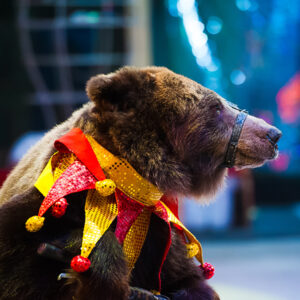
It’s Time for NY to End the Use of Wild Animals in Circuses
Wild animals used in traveling performances are often kept in chains and small cages, denied the opportunity to engage in normal behaviors and form social bonds with members of their own species, forced to endure painful physical punishment, and required to spend endless hours in transit. S.3629A/A.5850, a bill to prohibit the use of bears, wild cats, nonhuman primates, kangaroos, and wallabies in circuses and other traveling animal acts, passed the New York Senate last year. Now, the bill must pass in the State Assembly and proceed through the Senate once more before the legislative session ends on June 4. If you are a New York resident, please urge your state legislators to cosponsor this bill.
Commercial Trade
Recent News and Articles