Wild vs. Captivity
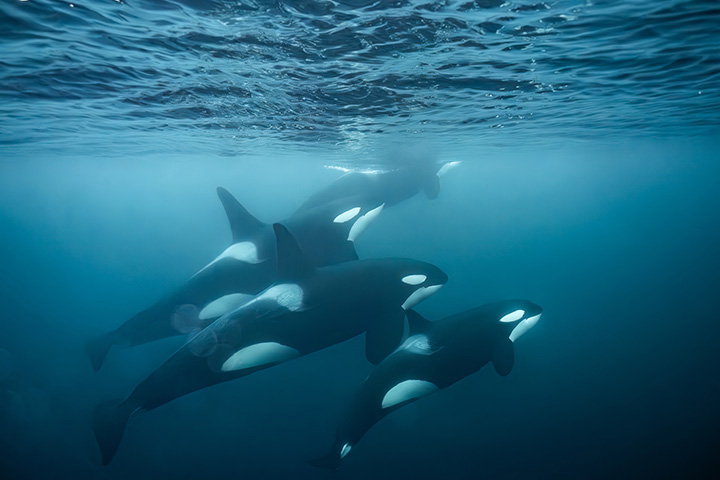
Photo by Dominik Plieseis
Overview
The lives of cetaceans in the wild is vastly different from their lives in captivity. Here are some of the greatest differences including those in social structure, diet, sensory environment, and overall well‑being.
Take Action: Stop Congress from Gutting the Marine Mammal Protection Act
Movement and Physical Space
In the Wild
Cetaceans can travel up to 100 miles daily, feeding and socializing with other members of their pods. Pods can contain hundreds of individuals with complex social bonds and hierarchies.
In Captivity
Cetaceans are housed in small enclosures, unable to swim in a straight line for long or dive deeply. Sometimes they are housed alone without opportunities for socialization, or they are forced to live with incompatible animals and even species with whom they would not naturally have close contact.
Habitat and Decision-Making
In the Wild
Cetaceans spend approximately 80-90% of their time underwater. They have the freedom to make their own choices.
In Captivity
Cetaceans spend approximately 80% of their time at the surface, looking for food and attention from their trainers, who make their choices for them.
Natural Behavior and Activity
In the Wild
Most small cetaceans are naturally active, playful and have complex social structures.
In Captivity
When tasked with entertaining tourists all day, with nowhere to escape, cetaceans often become bored, frustrated and aggressive.
Diet and Hunting
In the Wild
Cetaceans eat a variety of fish and invertebrates; some species eat other marine mammals. Orcas and other dolphins work in groups, utilizing complex strategies to locate and secure their prey. Some whale species dive thousands of feet in search of food.
In Captivity
Cetaceans are fed a limited variety of dead fish, often as positive reinforcement during training, with no opportunities to utilize their sophisticated hunting techniques. They require vitamins to supplement their diet, as nutritional value is lost when fish are frozen.
Social Structure and Family Bonds
In the Wild
Many cetacean species live in complex societies with their own cultures and dialects, maintaining close ties with family and friends. Some remain in family groups for life.
In Captivity
Many cetaceans have been violently captured from the wild, with no hope of ever being reunited with their families. Once in captivity, the animals are withheld forever from the wild gene pool. Captive-born animals are often forcibly weaned and shipped away from their mothers and the only companions they have ever known to other facilities.
Sound and Sensory Environment
In the Wild
Cetaceans live in a world of sound—they rely on their hearing as we do on our sight. Echolocation is their main sensory system and they use sound to find mates, migrate, communicate, forage, nurse, care for young, and escape predators.
In Captivity
Cetaceans must listen to filtration systems, pumps, music, fireworks, and people clapping and yelling every day. Their concrete and/or glass enclosures also reflect sounds, so a poorly designed enclosure can make artificial noises worse. Echolocation is rarely used, as a tank offers no novelties or challenges to explore.
Environment and Ecosystem
In the Wild
Cetaceans are surrounded by other sea life and are an integral part of marine ecosystems. They have evolved for millions of years in the oceans, and in most cases, they are the top predators.
In Captivity
Cetaceans are in artificial environments that are sterile or lack stimulation. Tank water must be treated or filtered or both to avoid health problems for the animals, although they may still suffer from bacterial and fungal infections that can be deadly. Other species, such as fish, invertebrates, and sea vegetation, cannot survive these treatments, so display tanks are as empty as hotel swimming pools.
Take Action for Marine Wildlife

Stop Congress from Gutting the Marine Mammal Protection Act
For over 50 years, the Marine Mammal Protection Act (MMPA) has safeguarded marine mammals from harm, preventing population declines and accelerating their recovery. By aiming to ensure that these animals remain at sustainable levels and continue to play vital roles in their ecosystems, the MMPA has been instrumental in marine conservation. Yet, despite its successes and long-standing bipartisan support, the law faces the most serious threat in its long history—draft legislation that, if enacted, would gut its core protections at a time when marine mammals need them most. Please write your members of Congress and urge them to defend this bedrock law and the remarkable species it protects.
Captive Marine Mammals
Recent News and Articles