History of Whaling
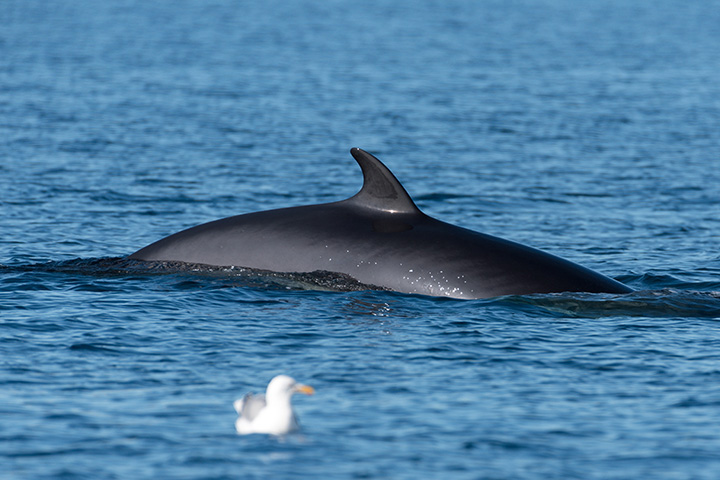
Photo by Mikko Palonkorpi
Overview
Over centuries, commercial whaling grew from a small Basque coastal practice into a massive global industry that pushed many whale species to the edge of extinction. Growing public concern eventually led to the International Whaling Commission’s landmark 1986 moratorium, one of the world’s most significant wildlife protections, though a few nations continue to find ways around it.
Take Action: Stop Congress from Gutting the Marine Mammal Protection ActCommercial whaling (distinguished from aboriginal subsistence whaling (ASW) by its participants, purpose, scale, and techniques) began in the 11th century with the Basque inhabitants of the French and Spanish coastlines of the Bay of Biscay. In the ensuing centuries, as they depleted local populations of whales, starting with right whales, Basque efforts expanded north, influencing other nations in northern Europe and eventually North America to begin their own whaling operations. Great Britain started hunting bowhead whales around the North American colonies in 1611, and American colonists began whaling (a practice known as Yankee whaling) out of Nantucket, Massachusetts, in 1712.
Through the 18th and 19th centuries, whaling was driven by demand for whale oil, which literally lit the lamps and greased the wheels of the industrial revolution. Other whale products also held commercial value, including ambergris (a stomach excretion of sperm whales used as a perfume fixative) and baleen (most famously used to stiffen women’s corsets).
As whaling ships became faster (with the advent of steam vessels) and larger, whaling became both more efficient and more competitive, with whaling nations establishing remote land stations and deploying factory ships that could spend months at sea processing whale oil on board. By the 20th century, industrial-scale commercial whaling had begun to target whales on their feeding grounds in the Antarctic, decimating whale populations. Scientists estimate that 2.9 million whales were killed between 1900 and 1999, and many species suffered catastrophic declines. Some populations, including the North Atlantic gray whale, were lost forever. Others, such as the North Atlantic right whale, number only in the low hundreds today even after decades of protection.
The major industrial whaling nations of the early 20th century included Great Britain, the United States, Norway, the Netherlands, Japan, Germany, and the Soviet Union, but whalers from Australia and Brazil also had a significant presence in the Southern Hemisphere. As whale populations began to dramatically decline, governments started to recognize the importance of “managing” whaling and conserving whale stocks, not just for future human generations but also for their own sake.
Early attempts at regulating commercial whaling fell short, as Japan and other leading whaling nations refused to participate. In 1946, however, shortly after the close of the Second World War, governments of the main whaling nations came together to negotiate the International Convention for the Regulation of Whaling (ICRW), recognizing the “interest of the nations of the world in safeguarding for future generations the great natural resources represented by the whale stocks.” The ICRW established the International Whaling Commission (IWC) whose (then) 15 member nations were authorized to adopt, by three-quarters majority vote, binding regulations on catch limits, whaling methods, protected areas, and species and sizes of whales taken.
While this system brought some measure of control to ongoing commercial whaling operations and offered respite for some of the most threatened species, commercial whaling continued largely unchecked under the auspices of the IWC for decades. For example, the Soviet Union killed 180,000 more whales than it reported to the IWC over a 25-year period, and underreporting of catch data is also known to have occurred in Japan’s coastal whaling.
As concerns about overexploitation and whale suffering at the hands of whalers spurred a powerful “Save the Whales” movement, the IWC, at its meeting in 1982, agreed to a global prohibition on commercial whaling, known as the moratorium. At that meeting, the IWC set all commercial whale quotas to zero with an effective end date of 1986 for coastal and 1985/86 for pelagic (high seas) whaling seasons.
The commercial whaling moratorium was a landmark event and remains one of the world’s most effective decisions for the protection of wildlife. Before it went into effect, tens of thousands of whales were being killed annually, reaching a peak of as many as 72,000 whales a year in the 1960s. By 1986, when the moratorium went into effect, four of the remaining whaling nations had stopped whaling, and the Soviet Union complied with the moratorium at the end of the 1986/1987 Antarctic whaling season. However, the IWC was unable to prevent Norway, Iceland, and Japan from evading its restrictions and continuing to hunt thanks to two provisions included in the ICRW: One allows governments to take objections to, and exempt themselves from, regulations they do not support. Another allows governments to issue “special permits” to conduct whaling for research.
Take Action for Marine Wildlife

Stop Congress from Gutting the Marine Mammal Protection Act
For over 50 years, the Marine Mammal Protection Act (MMPA) has safeguarded marine mammals from harm, preventing population declines and accelerating their recovery. By aiming to ensure that these animals remain at sustainable levels and continue to play vital roles in their ecosystems, the MMPA has been instrumental in marine conservation. Yet, despite its successes and long-standing bipartisan support, the law faces the most serious threat in its long history—draft legislation that, if enacted, would gut its core protections at a time when marine mammals need them most. Please write your members of Congress and urge them to defend this bedrock law and the remarkable species it protects.
Whaling
Recent News and Articles