Volume: 70 Issue: 1
AWI Provides Funding to Improve Welfare of Animals in Labs
The growing momentum to phase out the use of animals in research and testing has been encouraging. At this stage, however, many circumstances remain in which effective nonanimal alternatives are not yet available or approved for use, and AWI is committed to safeguarding and advancing the welfare of animals who continue to be used in laboratories. Since AWI’s founding 75 years ago, we have encouraged laboratory personnel to care for animals with compassion, minimize their pain and distress, and provide them with comfortable housing that allows the expression of species-specific behaviors such as foraging and social play.
AWI offers two annual grant programs to fund the efforts of individuals working to improve the lives of animals in laboratories across the United States and Canada. Our Refinement Research Award provides each recipient up to $15,000 in funding to develop or validate innovative methods of refinement to the housing, handling, or care of animals in research. Our Implementing Refinement Grant provides up to $8,000 in funding toward staff training or the purchase of equipment to improve the welfare of animals in research.
This year, the programs provided funding to the following individuals:
Refinement Research Award
- Sarah Michelle Sparks, student, Prescott College, in affiliation with Texas Biomedical Research Institute, to study the gut microbiome of captive marmosets, which is easily disrupted by bacterial infections, to help establish procedures for earlier interventions and tailored treatments to reduce the marmosets’ disease risk.
- Dr. Lara Rangel, associate professor, University of California, San Diego, to record and compare the vocalizations of rats in the wild versus in the laboratory under various social conditions to assess how social complexity influences rat communication and welfare.
Implementing Refinement Grant
- James Sheehy, animal facilities supervisor, IIT Research Institute, to purchase and install stainless steel vertical socialization tunnels for the institute’s colony of long-tailed macaques, doubling their living space and adding vertical complexity.
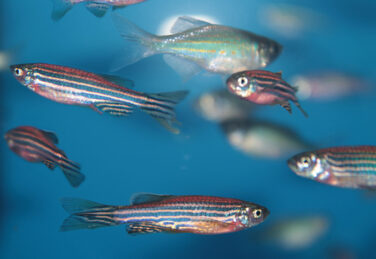
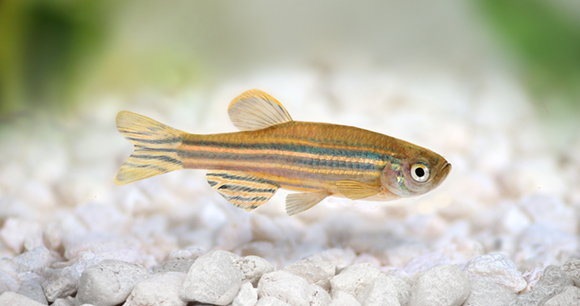
- Dr. Wai Hanson, senior clinical veterinarian and assistant professor, Emory University, to purchase and install high-quality images of gravel—designed to mimic natural substrate—beneath 780 tanks housing some 13,000 zebrafish across two facilities. This simple, easy-to-implement refinement has been shown to reduce zebrafish stress levels.
- Lillian Basom, director of operations, Franklin and Marshall College Vivarium, to improve the facility’s rat housing, resulting in a fivefold increase in the current living space, enhancing its complexity and promoting the expression of natural behaviors such as climbing, upright standing, and play.
- Cecily Burbidge, animal care and welfare supervisor, University of Calgary Faculty of Veterinary Medicine, to purchase high-quality nesting boxes and provide increased opportunities for exercise and enrichment for the institution’s colony of woodchucks.
- Dr. Julia Goldman, clinical veterinarian, Baylor College of Medicine; Melissa Marceau, animal health technician, Research Institute of the McGill University Health Centre; and Dr. Jennifer Mitchell, associate professor, University of Texas MD Anderson Cancer Center, to purchase mouse handling tunnels, which are proven to be a more humane and less stressful alternative to the traditional practice of picking up mice by their tails.
Congratulations to all funding recipients!
See more AWI Quarterly articles about: Animals in Laboratories
See more AWI Quarterly articles of type: Quick Read