Animal Welfare Enforcement Improvement Act
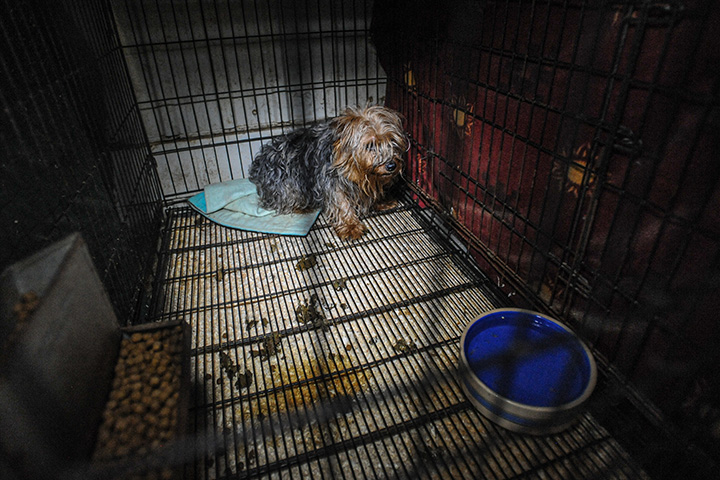
Photo by Jo-Anne McArthur/Montreal SPCA/We Animals
Overview
The Animal Welfare Enforcement Improvement Act (AWEIA) protects animals from unscrupulous dealers and exhibitors, and closes existing loopholes in the US Department of Agriculture licensing process that endanger animals and allow chronic violators to escape accountability. The AWEIA was last introduced in the 118th Congress (2023-2024).
The AWEIA would end the USDA’s practice of renewing exhibitor and dealer licenses even when licensees have long histories of failing to comply with the Animal Welfare Act (AWA), the primary federal law ensuring humane care of animals used in commercial enterprises.
In the past, the USDA routinely rubber-stamped license renewals. Under a new regulatory scheme instituted in 2020, animal dealers, breeders, and exhibitors—including large-scale commercial dog breeders, traveling circuses, roadside zoos, petting farms/zoos, animal acts, animal rides, exotic wildlife operations, and marine mammal facilities—are required to obtain a license only every three years upon passing a pre-announced inspection, and they are allowed up to three opportunities to pass.
Unfortunately, this system allows habitually out-of-compliance licensees to clean up just long enough to pass the scheduled inspection and remain licensed—even if unannounced inspections in between these scheduled inspections reveal violations.
In one stark example, hundreds of dogs bred for experimentation died at an Envigo facility in Cumberland, Virginia, yet the USDA failed to confiscate the remaining animals and even renewed the license for Envigo’s parent company, Inotiv.
The bill would require animal dealers and exhibitors to improve their veterinary care standards and renew their licenses annually, with each renewal contingent on passing an unannounced inspection by the USDA. Businesses determined to be noncompliant with the minimum care standards of the AWA, or that have repeatedly violated the AWA or local, state or other federal laws related to animals, would be denied licenses. Further, the USDA could permanently revoke a license (following a hearing) when a dealer or exhibitor has committed multiple animal welfare violations; such businesses would be barred from receiving a license under another business name or business partner.
Responsible Acquisition and Care
Recent News and Articles