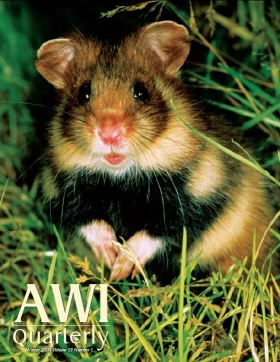
Being nocturnal, this wild hamster is foraging at night for a delicious morsel. Seeds, wild grasses and flowers constitute much of the hamster’s diet, which he will stuff in his cheek pouches for maximum carrying capacity before hoarding it away for the long-term. Hamsters tend to be territorial, both in the wild and in the laboratory setting, so these cheek pouches (also known as evaginations) come in handy when trying to keep food from others living close by. However, it is important for researchers to monitor hoarding instincts in the laboratory, as overeating could lead to health problems.