Volume: 70 Issue: 1
IWC at 80: An Evolution from Exploitation to Conservation
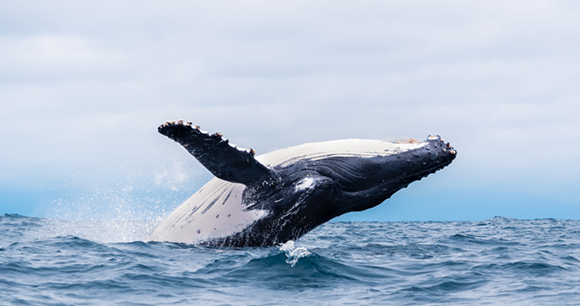
This year, we celebrate a pair of milestones in the history of international wildlife governance: December 3, 2026, is the 80th anniversary of the signing of the International Convention for the Regulation of Whaling (ICRW), the treaty that established the International Whaling Commission (IWC). It has also been 40 years since the IWC’s global prohibition on commercial whaling came into force. When the IWC gathers in Hobart, Australia, in late September for its next meeting, these anniversaries will offer more than an opportunity to reflect on progress over the past eight decades; they should serve as a call for renewed commitment to the essential role the IWC continues to play as whales face mounting threats in a rapidly changing ocean.
By the time the IWC was established shortly after World War II, the major whaling nations of the day had already driven many whale species to the brink of extinction. Centuries of commercial whaling had devastated whale populations around the world; in the 20th century alone, industrial fleets had killed nearly 3 million whales. And though the ICRW was ahead of its time in establishing both a conservation and management mandate, most IWC member governments initially viewed these mandates merely as a means to sustain whaling. As a result, they implemented few effective restrictions on hunting, and declines continued largely unchecked.
Eventually, however, the significance of the IWC’s conservation mandate came fully into focus. In 1982, IWC member governments—feeling the pressure from a public galvanized by a global “Save the Whales” movement that AWI’s founder, Christine Stevens, helped launch—made the historic decision to place a moratorium on commercial whaling. This global ban entered into force in 1986 and remains one of the most consequential conservation achievements of the modern era, staving off the imminent extinction of several whale species and populations and allowing others to begin a slow recovery from severe depletion. The whaling moratorium stands as clear evidence that principled, science-based international action—taken in time—can reverse the course of even the most catastrophic human impacts on wildlife.
But the story of the IWC is about far more than ending commercial whaling. Over the past eight decades, the organization has undergone a profound transformation—evolving from an industry-dominated quota-setting body into a globally respected forum for cetacean science, conservation, and welfare.
As the IWC approaches 80, the stakes are higher than ever. Despite the moratorium, some whale populations remain far below their pre-exploitation levels, and others that had recovered—such as North Pacific gray whales—are declining again. Unconscionably, some species are also still hunted—by Norway and Iceland through legal loopholes in the ICRW and by Japan as a nonmember (having withdrawn from the IWC in 2019 after years of trying to scuttle the moratorium).
Meanwhile, accidental entanglement in fishing gear kills hundreds of thousands of whales each year, and vessel strikes take unknown numbers more, including critically endangered species such as the North Atlantic right whale and Rice’s whale. Looming over all of this, climate change threatens to reconfigure ocean ecosystems in a shockingly fast timeframe, altering prey availability and cetaceans’ migration routes and reducing their resilience to these and other stressors.
Today, the IWC’s expanding conservation agenda reflects this reality. Through its Scientific and Conservation committees, the IWC now coordinates efforts to study and manage imperiled species, develops conservation management plans tailored to specific populations and regions, and pursues practical solutions to reduce human-caused harm. Critical programs such as the Bycatch Mitigation Initiative and the Ship Strike Strategic Plan translate scientific knowledge into concrete action, helping governments and industries prevent avoidable whale deaths.
Equally important is the IWC’s focus on the impacts of these threats on animal welfare. Once limited to regulating whaling methods, the IWC’s welfare agenda now recognizes that harpoons and rifles are not the only causes of pain and suffering in cetaceans. Entanglement, chronic noise exposure, vessel collisions, pollution, disease, and starvation also inflict immense suffering, often over long periods. By incorporating welfare science into its work, the IWC has helped reframe conservation not only as a population recovery issue, but also as an ethical responsibility to sentient individuals.
Looking ahead, the IWC’s continued relevance and effectiveness will depend on its willingness to fully embrace its modern identity as a conservation and welfare body. That means strengthening collaboration with other international and regional agreements and organizations to address existing and emerging environmental threats. And it means investing in capacity building so that all countries—especially those with limited resources—can implement measures to protect cetaceans.
Today, commercial whaling offers no credible solution to food security and no benefit to national economic development. It is fundamentally incompatible with the biological realities of cetaceans and the conservation challenges of the 21st century. Protecting live whales, rather than exploiting them for meat and other unnecessary products, delivers far greater ecological and economic benefits—from supporting healthy marine food webs to sustaining responsible whale-watching industries worldwide. It means recognizing them not as commodities, but as living contributors to ocean health. Growing scientific evidence shows that whales play a significant role in nutrient cycling, carbon sequestration, and ecosystem productivity. In a time of climate and biodiversity crises, their recovery is not a luxury—it is an indispensable part of the solution.
Over 80 years, the IWC has experienced both moments of profound failure and those of extraordinary vision. To ensure that its next decades are defined by recovery, not loss, the task before the nearly 90 governments, including the United States, gathering at a former whaling base in Australia this September is clear: Reaffirm the commercial whaling ban and support it with more whale sanctuaries, strengthen and adequately fund the IWC’s conservation and welfare agenda, and ensure the organization’s long-term financial stability so it can continue to meet the challenges of our planet in crisis.
For whales alive today and generations yet to come, the work of the International Whaling Commission has never mattered more.
See more AWI Quarterly articles about: Marine Wildlife
See more AWI Quarterly articles of type: Feature Article


