Volume: 70 Issue: 1
Eavesdropping on Whales in the Salish Sea
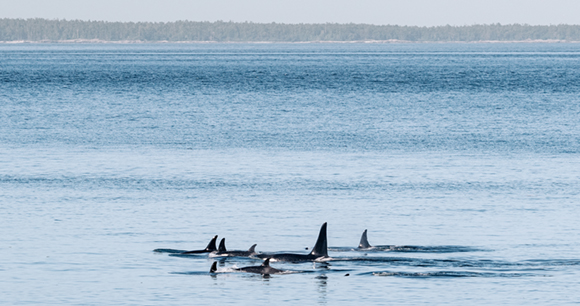
Even before humans started plying the oceans in noisy ships, the oceans produced a symphony of natural sounds emanating from marine life, rain, crashing waves, and the Earth itself. When the noise from ship engines, seismic testing, and active sonar was added, the symphony became a cacophony, with potential adverse impacts to marine life. Unlike the natural sounds in the ocean, sounds introduced from such anthropogenic sources are a form of noise pollution, often drowning out the sounds of marine life—including auditory cues that are key to the survival of many marine animals.
Whales use sounds to communicate, hunt, navigate, socialize, and find mates. Humans use whale sounds to monitor population numbers, track migration and distribution patterns, promote conservation, and mitigate the adverse impacts of human activities on imperiled whales and other marine life.
In June 2023, using funds from a Christine Stevens Wildlife Award, Raincoast Conservation Foundation researchers installed a hydrophone on the ocean bottom off the coast of the North Pender Island Interim Sanctuary Zone in Canada’s Salish Sea. This zone was established by the Canadian government as a protected, no-go area for vessels in order to reduce acoustic and physical disturbance in a critical foraging area for Southern Resident killer whales (SRKWs), a distinct population of fewer than 75 orcas designated as endangered under both US and Canadian law. SRKWs are threatened by anthropogenic noise, which impairs their use of echolocation to hunt and their ability to effectively coordinate group movements using acoustic communication; by contaminants, which impair reproductive success; and by decreasing numbers of Chinook salmon, their primary prey, due to overfishing, habitat loss, and dams.
The hydrophone and associated camera allow researchers to monitor SRKWs and other species, including Bigg’s killer whales, porpoises, and humpback whales. Using this equipment, researchers can detect the presence of particular species by listening for their characteristic vocalizations and document their exposure to vessel traffic, while saving the recordings to analyze call production and underwater noise levels.
Despite interruptions in data collection due to setbacks in keeping the hydrophone operational, the data have revealed important patterns regarding how endangered orcas use this area and how noise affects their communication. Acoustic monitoring detected SRKW calls on 41 days between June 2023 and November 2025, with encounters lasting up to nearly four hours. Detections peaked in June, confirming this area as critical summer foraging habitat. Most strikingly, analysis of recordings from this hydrophone and a partner hydrophone in waters off of neighboring Saturna Island showed that SRKWs from J pod (one of three pods in the population) called less frequently as background noise levels rose, with call rates dropping by roughly 21 percent for every 10 decibel increase in ambient noise.
These findings demonstrate that vessel noise disrupts orca communication and underscore the conservation value of protecting natural acoustic environments in the Salish Sea. As such, the data help inform the development and strengthening of regulations and enforcement efforts in support of SRKW recovery.
This study was funded by the Christine Stevens Wildlife Awards program. Learn more about this program or view additional studies.
See more AWI Quarterly articles about: Marine Wildlife
See more AWI Quarterly articles of type: Quick Read


