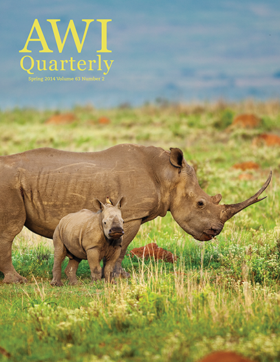
A female white rhinoceros (Ceratotherium simum), with calf, grazes on the rich grasslands of South Africa’s KwaZulu-Natal province. Perched between the calf’s ears is an oxpecker, a bird that feeds off ticks and insects on the backs of rhinos and other large African mammals. Despite her leanness, this mother rhino appears healthy and in possession of an impressive horn that helps her forage in thickets and defend herself and her offspring. Others of her kind are not so fortunate. Poachers target rhinos for their horns, which, despite being made of keratin—the same protein that forms hooves, hair and fingernails—is coveted for its alleged (but unsubstantiated) healing properties. We discuss the heavy toll that the illegal (as well as legal) wildlife trade is taking on animals around the globe. We also examine what various nations, including the United States, are doing to address the crisis.