Volume: 74 Issue: 4
Krill Fishers Block Antarctic Ocean Protection
In October, the Commission for the Conservation of Antarctic Marine Living Resources (CCAMLR) convened in Australia. AWI is a member of the Antarctic and Southern Ocean Coalition (ASOC), an alliance of conservation organizations from around the world that works to protect the Antarctic and Southern Ocean ecosystems from harmful human activities. As an observer to CCAMLR, ASOC engages in policy analysis and discussion—raising public awareness and representing the position of the marine conservation community.
Conservation opportunities discussed at the October meeting included a proposed marine protected area (MPA) for the Antarctic Peninsula and management of the significantly overlapping krill fishery within the Southern Ocean. Krill are tiny, shrimp-like crustaceans that serve as a key element of the Antarctic food chain, comprising 96 percent of the caloric intake of Antarctic seabirds, mammals, and finfish. Vital to the Antarctic ecosystem, these small-but-mighty animals also remove 20 million tons of carbon from the atmosphere each year by eating carbon-capturing algae and dropping carbon-filled feces to the bottom of the ocean. Yet, due to overfishing, this ecosystem could be in trouble.
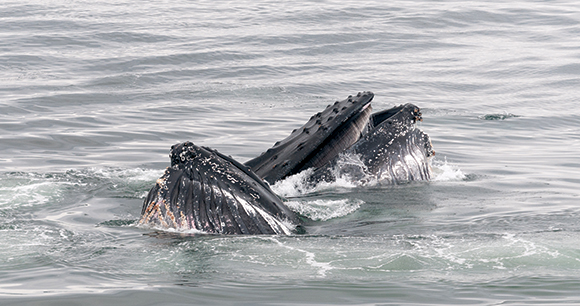
For the first time ever, Antarctica’s krill fishery closed early this year after reaching catch limits months ahead of schedule. Driven by the demand for aquaculture feed, human nutritional supplements, and pet food, the krill fisheries are outcompeting krill’s natural predators: marine wildlife such as penguins, whales, and seals, many populations of which are vulnerable.
Led by Chile and Argentina and grounded in sound science, the proposed Antarctic Peninsula MPA would have created no-fishing zones to reduce stressors on the Antarctic ecosystem. CCAMLR proposals must be adopted by consensus, however, which could not be reached due to the opposition of Antarctic krill–fishing nations. In fact, one of those nations—Norway—put forth a proposal to almost double the catch limit for krill in the Southern Ocean. Thankfully, this proposal also failed to advance.
Antarctic krill fishing is conducted by a small number of nations, with Norway among the most prolific. Norway is also the world’s largest producer of farmed salmon, whose feed is supplemented by krill meal and oil. The aquaculture industry, in fact, receives the largest share of Norway’s krill catch. Using marine animals—even animals as small as krill—to feed farmed fish is one of the more illogical and ecologically destructive practices of an industry that often touts its “sustainability.” The Antarctic ecosystem, certainly, cannot sustain the continued depletion of its krill population.
See more AWI Quarterly articles about: Fish and Fisheries, Marine Wildlife
See more AWI Quarterly articles of type: Quick Read


