a lab mouse crawls around a terrarium

Volume 74  Issue 3

Fall 2025

In this Issue

A look at the future of “organ chips” and other emerging laboratory research and testing technologies that avoid the use of animals while often producing more human-relevant results.

Russell and Burch’s landmark 1959 book, The Principles of Humane Experimental Technique, introduced the 3Rs of more humane animal research: replacement of animals as models, reduction in the number of animals used, and refinement of housing and handling methods to reduce animal stress and suffering. The authors considered “absolute replacement” to be the “absolute ideal.” Technological advances in “new approach methodologies” (NAMs), including nonliving organoids and organ chips, are increasingly making replacement feasible in some arenas. Yet absolute replacement still faces significant hurdles—technological, cultural, and otherwise.
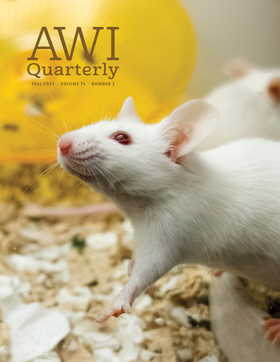
Photo by Bradengar S/500px


More in this Issue

Beagle Breeder Under Investigation

Animals in Laboratories

House Committee Leadership Bullish on Anti-wildlife Bills

Endangered Species, Marine Wildlife, Terrestrial Wildlife

Life After the Lab

Animals in Laboratories, Companion Animals

Securing Funding for Animal Welfare Priorities

Companion Animals, Equines, Farmed Animals

Reviews