House Ag Committee Advances Farm Bill: Companion Animals Fare Better than Horses and Farmed Animals
March 6, 2026 in Companion Animals, Equines, Farmed Animals
Washington, DC—This week, following deliberations over the course of two days, the House Committee on Agriculture voted to advance its version of the Farm Bill—H.R. 7567, the Farm, Food, and National Security Act of 2026. The Farm Bill is a massive legislative package that serves as a key driver of food and agriculture policy in the United States and touches on multiple other policy areas affecting animal welfare. Though scheduled for reauthorization every five years, a complete Farm Bill has not passed Congress since 2018.
As it stands, H.R. 7567 is a mixed bag for animals. Among the positives:
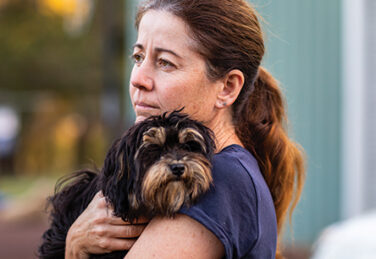
- It reauthorizes the Protecting Animals with Shelter (PAWS) grant program until 2031. The PAWS program helps service providers expand their capacity to assist domestic violence survivors who have companion animals.
- It removes language in the bill that would have made it more difficult for animals suffering in puppy mills to get the help they need. The deleted text raised the threshold on the level of suffering necessary before the US Department of Agriculture would even have to consider confiscating dogs from breeding facilities. This language was struck via an amendment offered by Rep. Zach Nunn (R-IA). Rep. Shri Thanedar (D-IL) spoke in support of the amendment and Committee Chairman Glenn Thompson (R-PA) gave his blessing: It passed on a voice vote.
Otherwise, many negative aspects of the House’s version of the Farm Bill remain. One of the most troubling provisions is the inclusion of the Save Our Bacon Act (H.R. 4673), which seeks to nullify California’s Proposition 12 and other state-level measures that improve the treatment of farmed animals by requiring more humane housing and prohibiting the sale of products from animals raised in conditions that don’t meet the new standards. Underscoring the controversy surrounding this effort, Rep. Jim Costa (D-CA) offered an amendment to strike the dangerous language. The amendment was withdrawn, so no vote took place. As Congressman McGovern (D-MA) powerfully stated during debate on the amendment: “I can’t believe we’re talking about Proposition 12 again, and quite frankly, Mr. Chairman, I find it hard to believe that you think killing states’ rights on animal welfare will work this time. … If you think that this won’t end in bipartisan opposition once again, then you’re the most optimistic person in America. The issue is settled. … Americans expect farm animals to be treated with basic humane standards—and I’m talking about pigs being able to turn around.”
The Farm Bill also contains concerning text allowing increased sales of uninspected meat. Based on language in the contentious Processing Revival and Intrastate Meat Exemption (PRIME) Act (H.R. 4700), this provision seeks to permit the sale of meat from custom slaughterhouses to consumers. At custom slaughter facilities, cattle, pigs, sheep, and goats are slaughtered for anyone who wants meat for themselves, their household, or nonpaying guests. These facilities also process “game” animal carcasses for hunters. They are not subject to continuous federal or state inspection and, according to our 2023 review of USDA documents pertaining to custom slaughter, are among the worst violators of humane handling requirements.
Moreover, the bill fails to include a prohibition on the slaughter of American horses for human consumption, despite overwhelming public support for ending this gruesome and inhumane practice. A bill to accomplish that, the Save America’s Forgotten Equine (SAFE) Act (H.R. 1661/S. 775), builds directly upon the prohibition on dog and cat slaughter included in the last Farm Bill. Throughout the 119th Congress, numerous lawmakers on both sides of the aisle have requested that Committee Chairman Thompson incorporate provisions of the SAFE Act into this Farm Bill.
Finally, the bill would allow the mink farming industry to receive taxpayer dollars for developing and expanding into international markets, even though mink on fur farms incubate dangerous diseases such as COVID-19 and avian influenza, creating the perfect conditions for new variants to jump to humans. It is a poor use of federal dollars to subsidize an industry that American consumers have overwhelmingly rejected, and one that scientists confirm poses a severe risk to public health.
Assessing the gains and disappointments, Susan Millward, executive director and CEO of the Animal Welfare Institute (AWI), said, “We’re thankful to have legislators on both sides of the aisle who are committed to protecting animals from abuse. But, unless Congress wishes to undermine the wishes of the American public regarding horses and farmed animals, there remains much work to be done before the Farm Bill is finalized.”
The Farm Bill will next head to the full House of Representatives for a floor vote. AWI is committed to working with members of Congress to improve the bill’s outcomes for all animals.
Media Contact Information
Kim Meneo, Animal Welfare Institute
kim@awionline.org, (202) 446-2116
About AWI
The Animal Welfare Institute (awionline.org) is a nonprofit charitable organization founded in 1951 and dedicated to alleviating animal suffering caused by people. We seek to improve the welfare of animals everywhere: in agriculture, in commerce, in our homes and communities, in research, and in the wild. Follow us on Facebook, Instagram, Threads, Bluesky, and LinkedIn for updates and other important animal protection news.
Latest AWI Quarterly Articles
See All Companion Animals AWI Quarterly Articles